 by
by 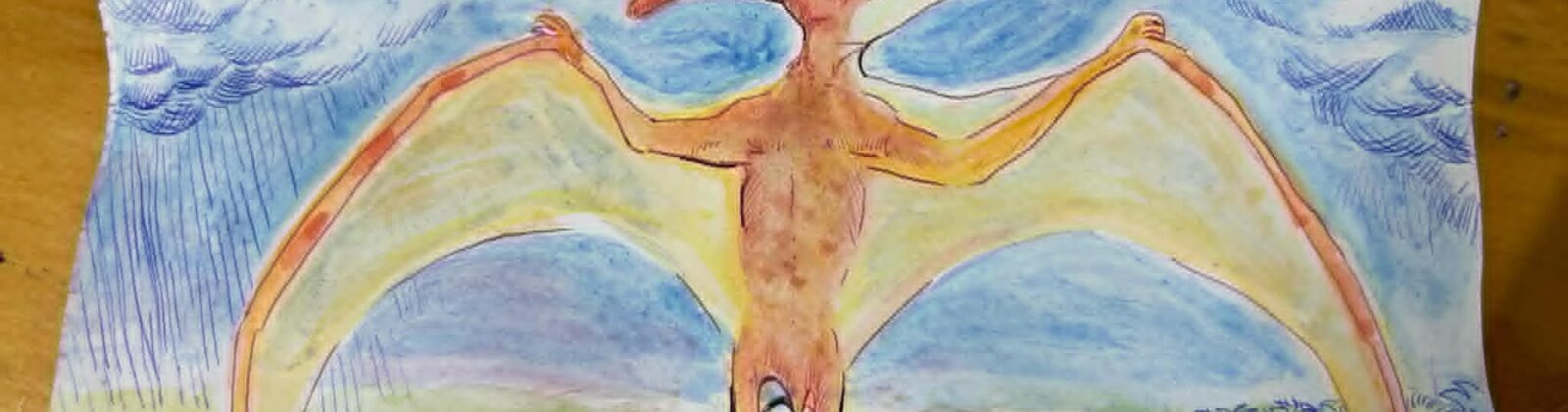
This morning I awoke to the sight of white-crested waves outside the cabin window and the sound of those waves crashing against the rocking ship. It was quickly apparent that these were the roughest seas we’ve experienced so far on this journey. In fact, the ocean was so rough that the deck had to be secured, cooping us indoors for the day. Earlier in the journey, this combination of fierce waves and no fresh air might’ve kept many of us down with seasickness. But evidently, our sealegs have gotten stronger, since we were all able to make it to the lab for at least some of the day’s activities.
Although the sea state hasn’t been our friend today, even the aggressive waves couldn’t keep us from learning lots about knots! Several knots were demonstrated—the Alpine butterfly, the sheet bend—but most essential of all was the bowline knot. To tie a bowline, first make a loop in the line, send the rabbit through the hole, around the tree, and back through the hole, and if you did it right, you will have a knot that holds fast no matter which direction the line is tugged. Of course, it makes more sense seeing the knot demonstrated in person. And, like any useful skill, tying knots consistently and well takes practice.
Simply existing on a ship in rough seas is draining. Even while sitting in place, the human body is constantly making adjustments in an attempt to stay upright and balanced in this ever-rocking environment. This subtle but constant exertion can quickly become tiresome, as I found out this morning while struggling to keep my head up during a walkthrough of RStudio. One lesson I’ve learned from today is that sometimes, the most productive thing I can do is get some rest.
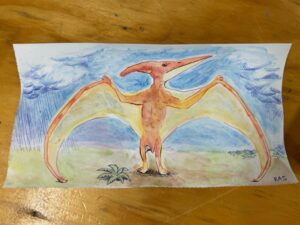
Fittingly, our final lab activity of the day was a restful one. After a delightful dinner, we convened for a relaxing session of watercolor painting, complete with the soothing sounds of a Spotify calm jazz playlist. As it turns out, watercolor is a nice and peaceful distraction from the motion of the water outside. Although I treated this particular activity as a brain break rather than an opportunity to actively develop my artistic skills and ideas, this expedition as a whole has been incredibly inspiring for me as both an aspiring oceanographer and as an artist. Everything I’ve seen throughout this shipboard experience, from the graphs of data collected by the CTD to the mercurial beauty of the ocean surface itself, has fueled new ambitious ideas for the direction I plan on taking my art once I am back on dry land. I can’t wait to see what we encounter next as our journey to Seward continues!