 by
by 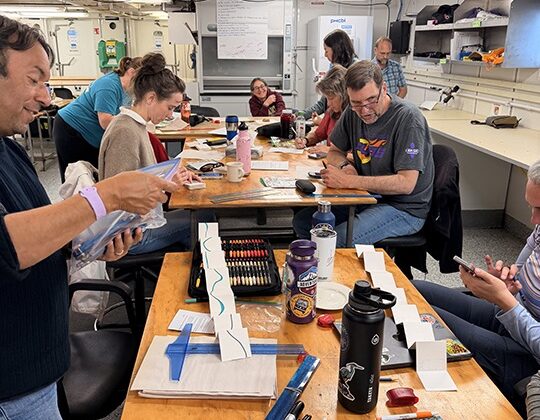
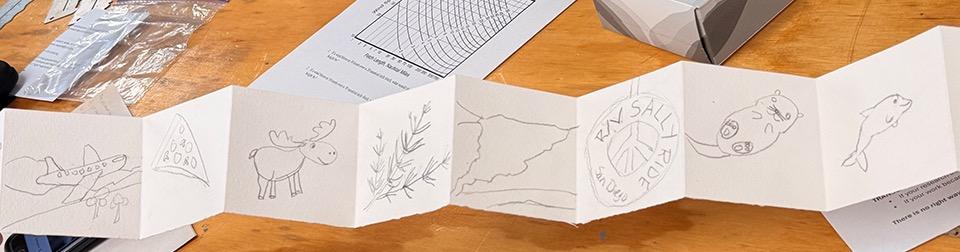
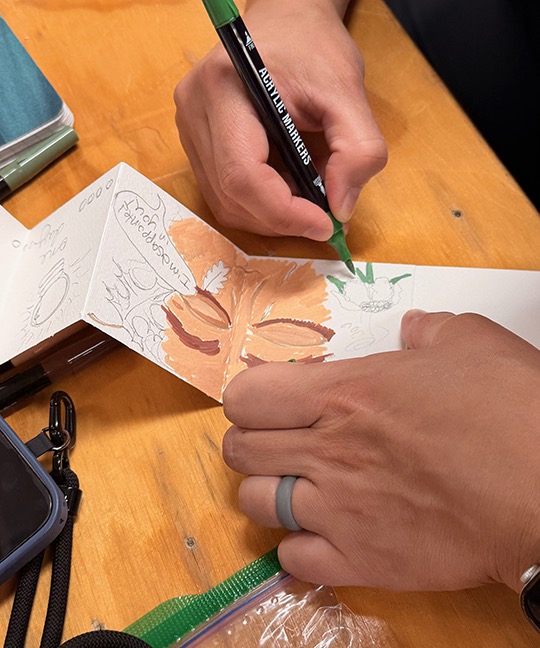
On a research vessel, everyone arrives carrying something: equipment, research questions, expectations, and a small gift to share with the temporary community that will live and work together at sea. My contribution was a stack of handmade tiny books, drawing pencils, acrylic paint markers, and some ideas to explore for anyone who wanted to participate. The books are small enough to fit in a pocket, but I hoped they make space for something much larger: observation, conversation, reflection, and shared creativity during the voyage.
Why Tiny Books?
The tiny books grew naturally out of both shipboard culture and my own artistic practice. Because space is limited aboard a vessel, the project needed to be portable, flexible, and welcoming to anyone regardless of artistic experience. Tiny books are approachable in a way large blank pages often are not—they invite experimentation, play, and storytelling. Their scale makes them feel personal and manageable, turning creativity into something immediate rather than precious.
Making as Social Glue
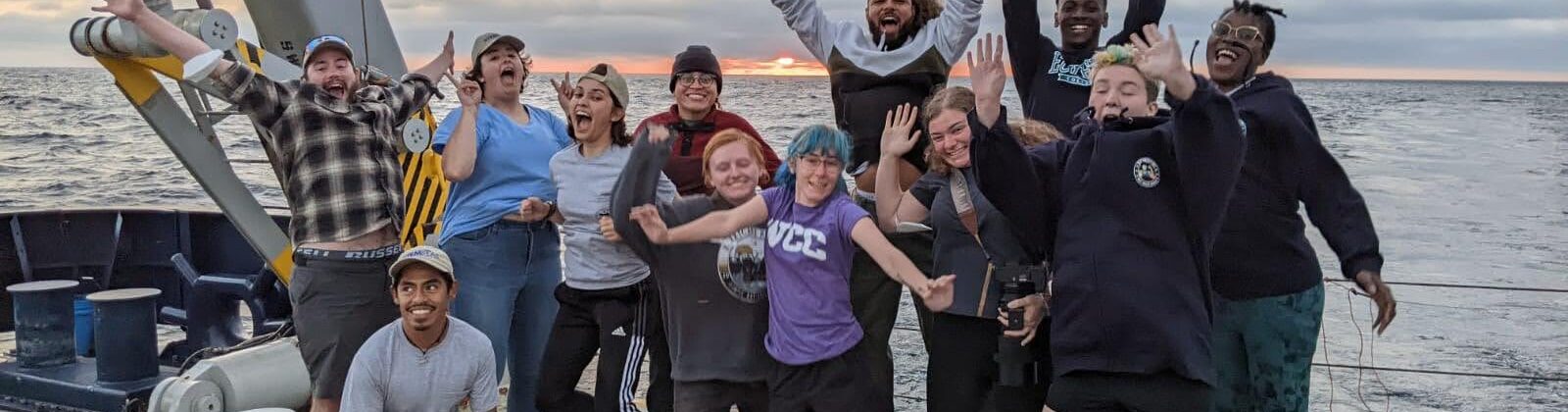
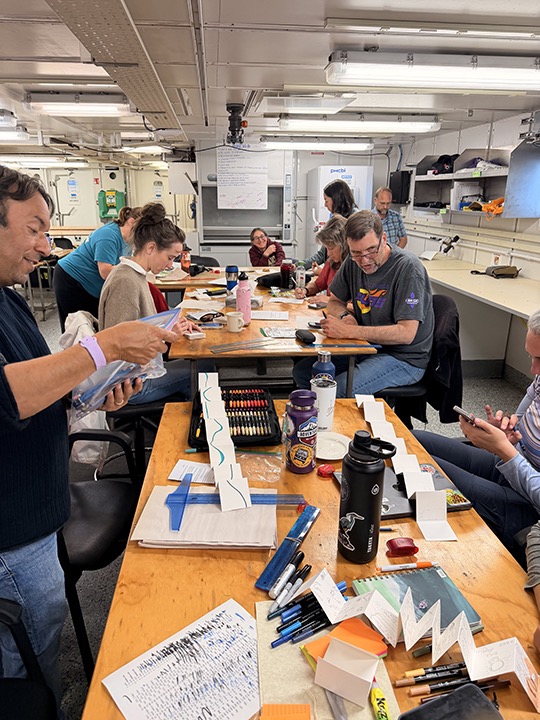
Temporary communities form quickly at sea. People who may come from different disciplines, institutions, or backgrounds suddenly find themselves sharing meals, workspace, weather, and long stretches of ocean. Creative activity can become an unexpected connector in that environment. Acrylic markers passed around a table becomes an invitation rather than an assignment: a reason to pause, create, laugh, compare ideas, or simply enjoy each other’s company. What begins as making can become conversation.
Tiny Books as Another Kind of Data Gathering
Scientists aboard this voyage are gathering formal research data, but human experience generates another kind of record—observations, impressions, fleeting moments, sketches, questions, fragments of thought. The tiny books offer a place to collect those less quantifiable experiences. They become containers for noticing not scientific instruments, but tools for reflection, memory, and personal documentation of life at sea. Jordan gathered data about her shipboard companions by drawing their water bottles. The water bottles are stand-in portraits of each person in our cohort as well as our mentors. Moving in a different direction, Rus created a vertical book about the CTD instrument used to measure the conductivity, temperature, and depth of the ocean as well as shrink Styrofoam coffee cups into tiny demi-tasse. Finally, Cristina told her story of finding community and belonging on a STEMSEAS voyage.
Creativity as Another Way of Seeing
Making changes observation. Drawing something requires a different kind of attention than simply looking at it. Sketching an impression or idea fixes a moment that might otherwise disappear into the blur of routine or distraction. Creative practice slows perception and encourages different questions. Scientists and artists may approach observation differently, but both rely on disciplined attention, curiosity, and the willingness to notice patterns that others might miss.
Storytelling and Public Connection
Scientific discovery matters deeply, but public understanding often depends on how knowledge is communicated and shared. Stories, images, and personal experiences help bridge the distance between specialized research and broader audiences. These tiny books might become small vessels for storytelling—ways of translating individual experiences aboard the ship into something relatable, visual, and human.
Mentorship / Shared Creative Confidence
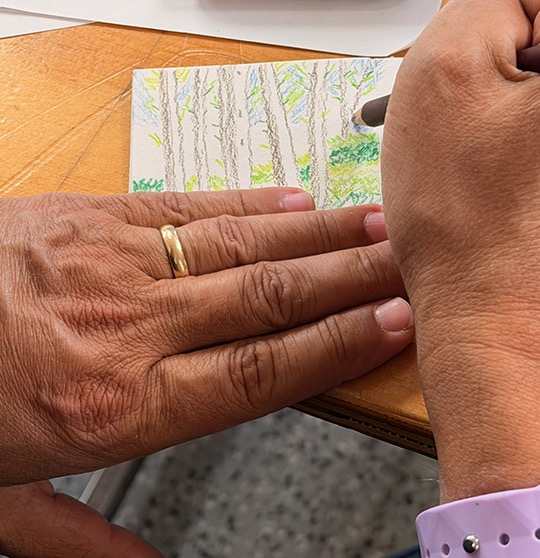
Not everyone arrives thinking of themselves as creative, and that’s part of what makes projects like this meaningful. A small invitation to make something can lower barriers, encourage experimentation, and create moments of confidence or discovery. Especially in interdisciplinary environments, creativity can become less about artistic skill and more about participation, reflection, and curiosity about new ways of thinking.
Reflection at Scale
Crossing a long stretch of ocean invites reflection on scale—vast water, deep time, complex research questions, and the temporary human community moving through it all together. In that context, it feels fitting that some of the most meaningful exchanges may happen through something that fits in the palm of a hand. Small objects can carry surprisingly large stories.