
 by
by 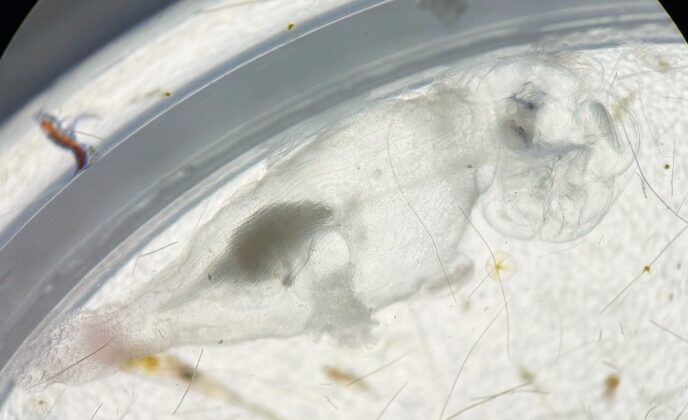
Everybody knows that fish come in many shapes, sizes, and colors. But how many people know about the most abundant type of organism in the world? The ocean is home to a large subset of plankton called zooplankton. Planktonic animals are defined as those that cannot swim against an average current, as opposed to nekton, which include strong swimming fish, mammals, and other ocean species. Some organisms even start out as plankton and then grow up to be nekton. Zooplankton are tiny, often forgotten organisms that make up most of the ocean’s biomass.
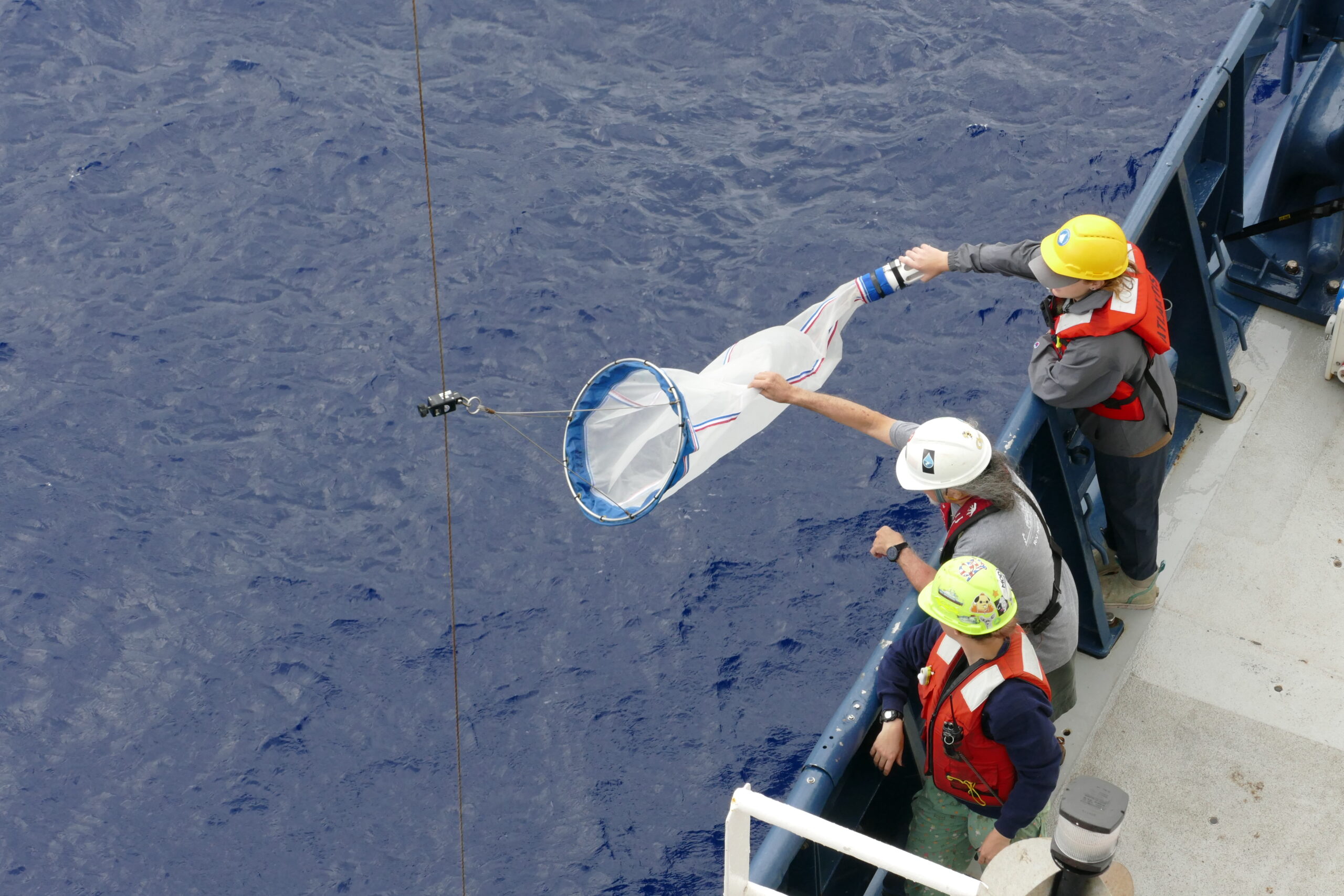
On the R/V Atlantis, we have been able to deploy ring-nets, which are cone shaped nets with circular openings that funnel into a cup known as the caught-end. We can deploy this net to different depths and collect zooplankton to study. We decided to sample 150m deep in multiple places along our route. Many different species of zooplankton were caught, but I’ll only include a few here.
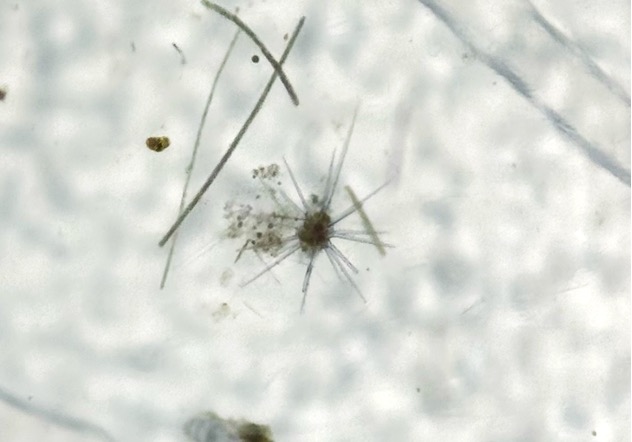
The zooplankton that I think are the coolest are the ones in phyla Radiolaria. They are unicellular zooplankton that are considered mixotrophs, a mix between heterotrophs and autotrophs. This is because they utilize symbiotic algae called zooxanthellae to provide them energy. Radiolarians are made of two parts, an inner endoplasmic layer, and an outer ectoplasmic layer. These layers are surrounded by a silicate shell, with several spines, called pseudopods, extending outwards. These pseudopods are mostly used for maintaining buoyancy in the surface layers of the ocean, which is necessary for the organism’s survival.
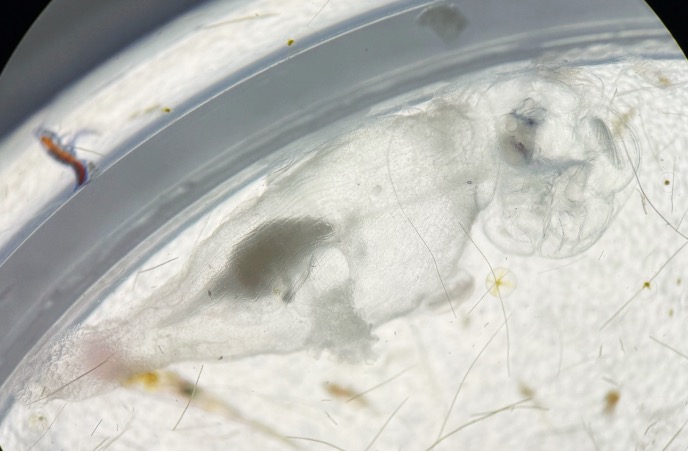
Another interesting group of zooplankton I will discuss are in the order Pteropoda. These organisms are very small mollusks and are commonly referred to as Sea Butterflies or Sea Angels. They usually look like they have wings, called parapodia, or that they are flying around in the water. Some pteropods can have a calcified shell, which is often transparent to stay hidden in the surface waters. Pteropods eat nearby phytoplankton and provide food to larger organisms, like small fish.
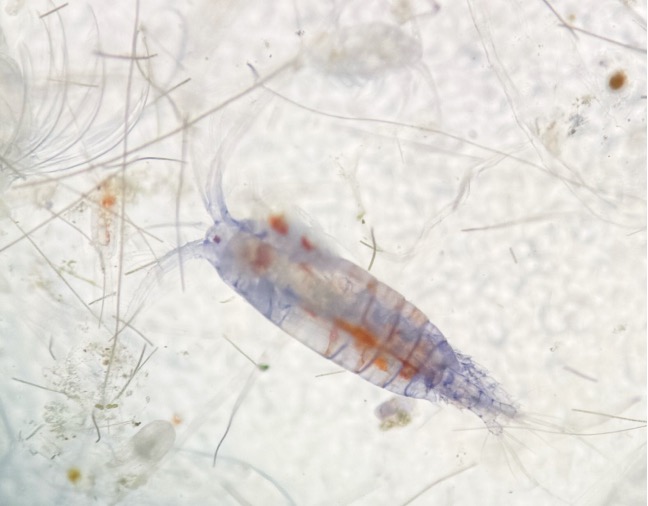
A class of zooplankton that are found almost everywhere in the world are the Copepoda. Copepods are small crustaceans found in saltwater, freshwater, benthic, and pelagic habitats. There are over 13,000 species included in Copepoda, but most are defined by their crustacean shaped bodies and long antennae. Most copepods are also translucent, which gives them the advantage of being virtually invisible in the upper water column. They can even have no eyes, one eye, or two eyes depending on the species. Copepods move very quickly, which was observed under the microscope onboard the ship. They tend to dart around the dish, often hitting walls and trying to escape. Some species can even jump out of the ocean water to escape predators.
I have spent hours onboard searching our caught ends for new and interesting zooplankton species, and I have taken over 400 pictures of tiny organisms to study further. The sheer volume of biomass in the upper layers of the ocean is something that will always amaze me, especially after hanging out with so many little animals this trip.