 by
by 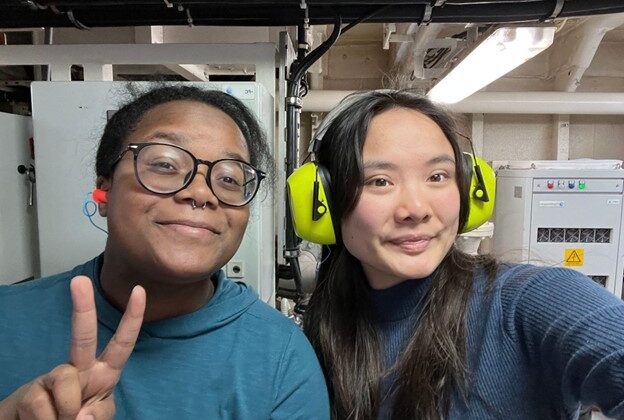
By Kaylee Ly, Mission College
Editor’s Note: This is a delayed post from earlier in the cruise… transport yourself back in time!
Hellooo everyone!! I’m Kaylee, and I’ll be taking over the blog for today! First thing in the morning at 8AM, we finally deployed the CTD (conductivity, temperature and depth). While most of the STEMSEAS students weren’t directly involved in helping set out the CTD today, we did have a mock demonstration the day before, which was so cool to be able to handle the bottles and tinker with them. Jen, Haley and I were watching the whole process from a bird’s eye view on the top deck.
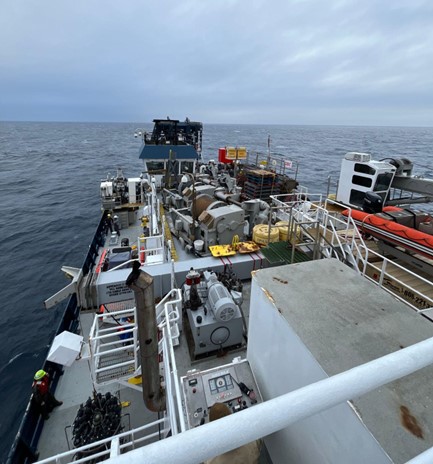
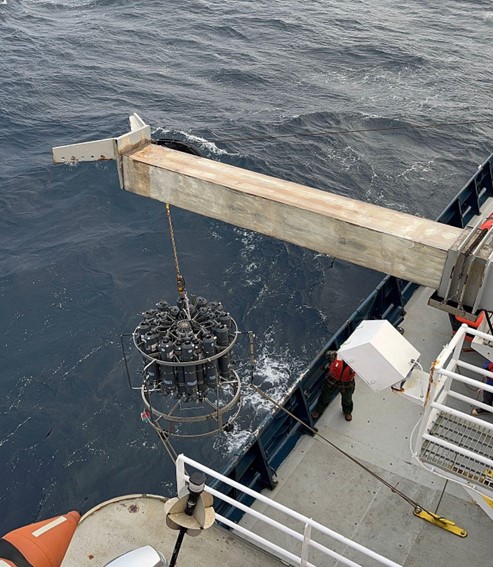
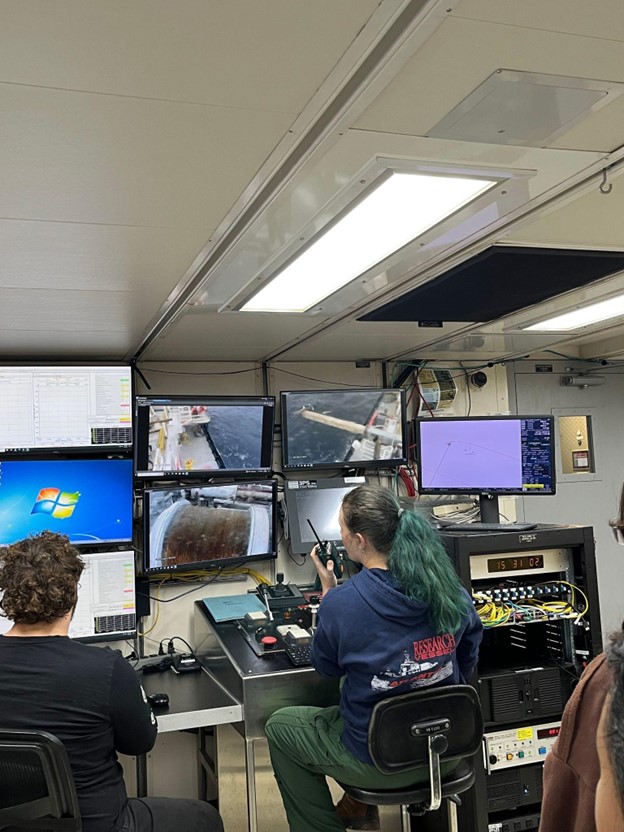
Lance, an AB (able-bodied seaman) was controlling the winch that moved and lowered the CTD. He was following instructions from Ana, an SSSG (shipboard science support group), who was communicating to him through a radio walkie-talkie, and telling him how many meters to lower the CTD. It was lowered down to 100 meters, then Ana took us inside the computer room where she continued to communicate with Lance, and eventually took over the control of the winch from the computer room!
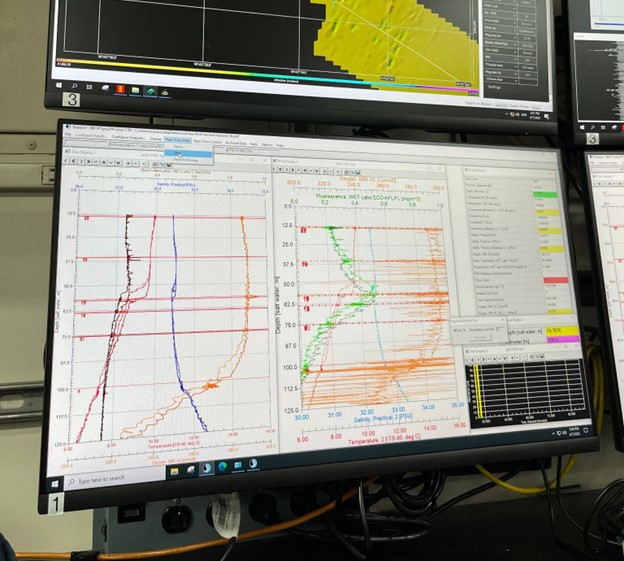
All of the information from the CTD was recorded on many monitors (see below). Salinity, temperature, oxygen and fluorescence were measured, although the second oxygen sensor on the right side of the screen had some problems in properly recording the data. The red lines in the graphs indicate where each CTD bottle was fired to record all the information at different depths!
After we finished with CTD data collection, half of the students had a tour of the engine room, with Brian being the main guide that showed everything to us.
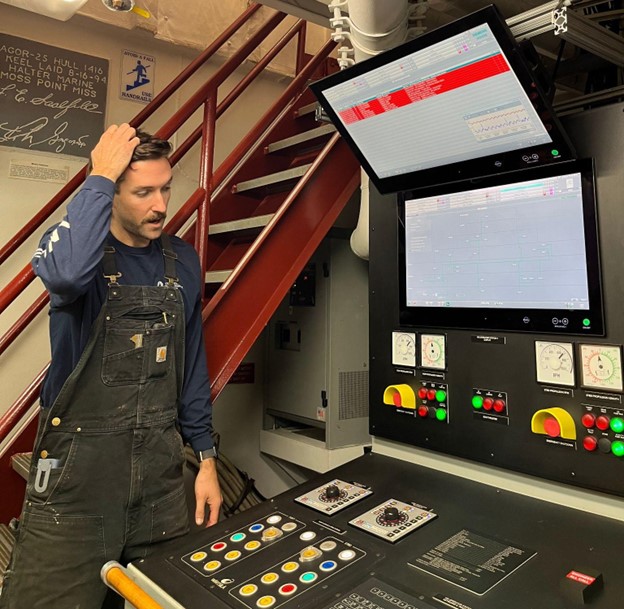
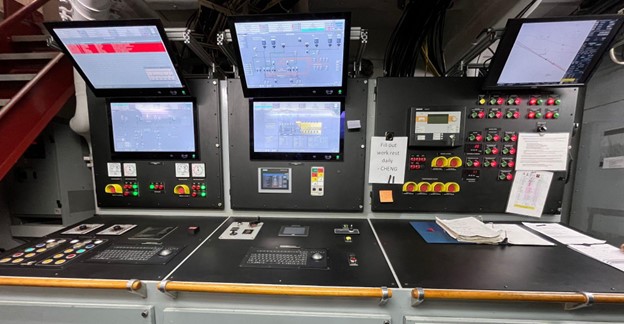
There are 14 fuel tanks, all of which are powered by diesel (~quarter million gallons)! There are generally two engines that are on to power the ship, but there are four in total. Brian told us about how there was a sinking fishing ship with children on board, and all four engines were activated to save them! It’s really incredible knowing how they were able to put the ship into full throttle and rescue them.
We learned that freshwater loops cool instruments on board while saltwater loops cool the freshwater! For redundancy purposes, there are at least two of every system on the ship (2+ engines, radars, monitors, etc), which serves to keep the ship running even if one of them breaks down.
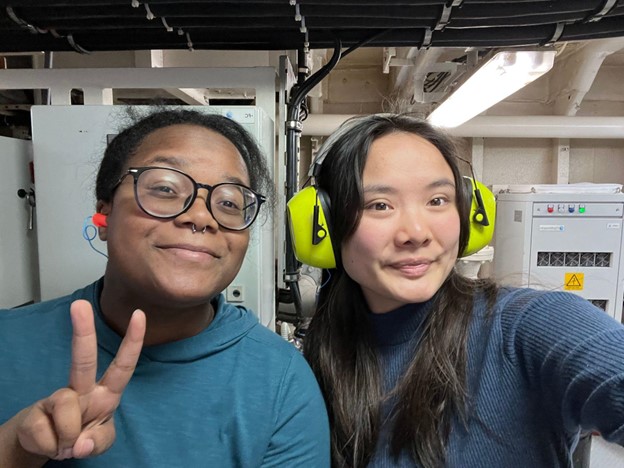
After the general talk-through at the outside of the engine room, we then put on earplugs and headphones to enter inside! It is extremely loud inside, and being in there made my entire body vibrate and rattle. Tools, instruments, pipes, and systems were everywhere!! There were some areas that were chilly while some others were toasty, and it was so interesting to see.
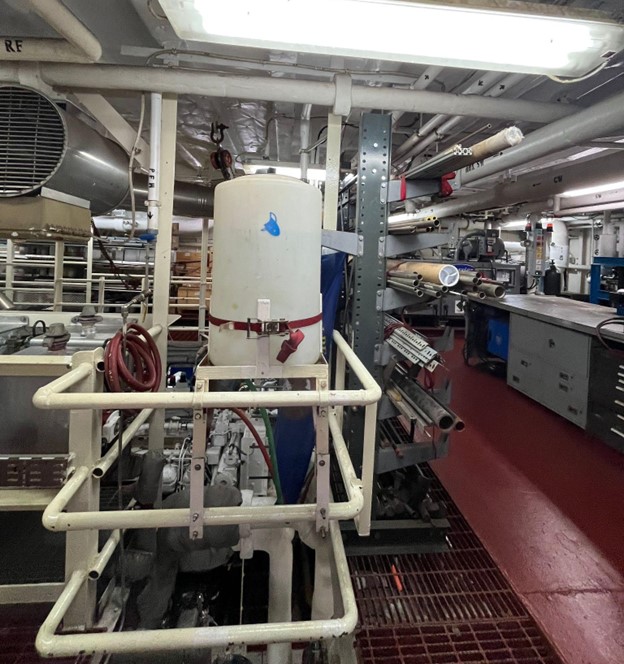
All in all, it was an incredible experience learning about the CTD and engine room. Being involved with this journey puts into perspective how intricate working on a research vessel is, and how truly attentive everyone is to their craft.
Until next time!