 by
by 
Yesterday we woke up to a drizzly Seward, AK, after our first night onboard the R/V Sally Ride. We were tied up at the dock but still felt a subtle and unpredictable roll every now and then. We all checked in with our Chief Scientist, Marina Halverson, by 0645 to verify we were onboard; the gangplank was removed from the dock around 0700; shortly after 0800 we ever-so-silently slipped away from the dock. Sally Ride is remarkable in many ways. Every bit a floating science lab, designed specifically for a breadth of oceanographic research. During our bridge tour the day before, Captain Clifford explained Sally runs off diesel-electric power: diesel engines run electrical generators. That electricity then goes to power everything, including the propulsion system. The various propellers onboard, in connection with the GPS, can “station keep”, or hold the vessel’s position (within 1 meter!). They are also capable of pushing us at about 10kts (or 11 mph) through the water.
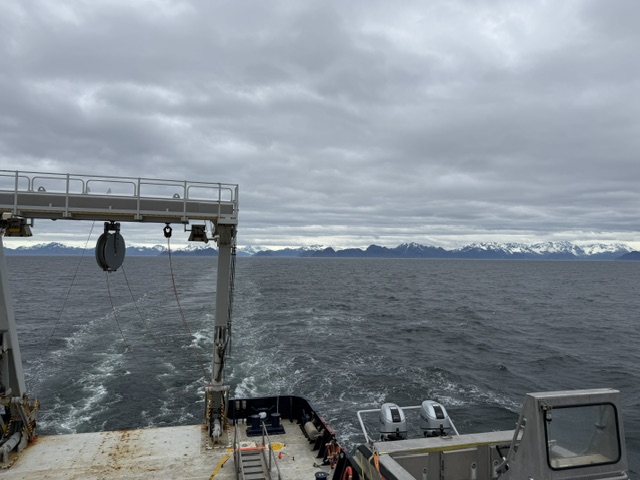
The waters of Resurrection Bay were almost glassy as we silently glided away from shore. We were able to stay on deck for a while but eventually went below for breakfast. The meals are nothing short of incredible. There is quantity, quality, and variety at 0730, 1130, and 1700. And plenty of options in between.
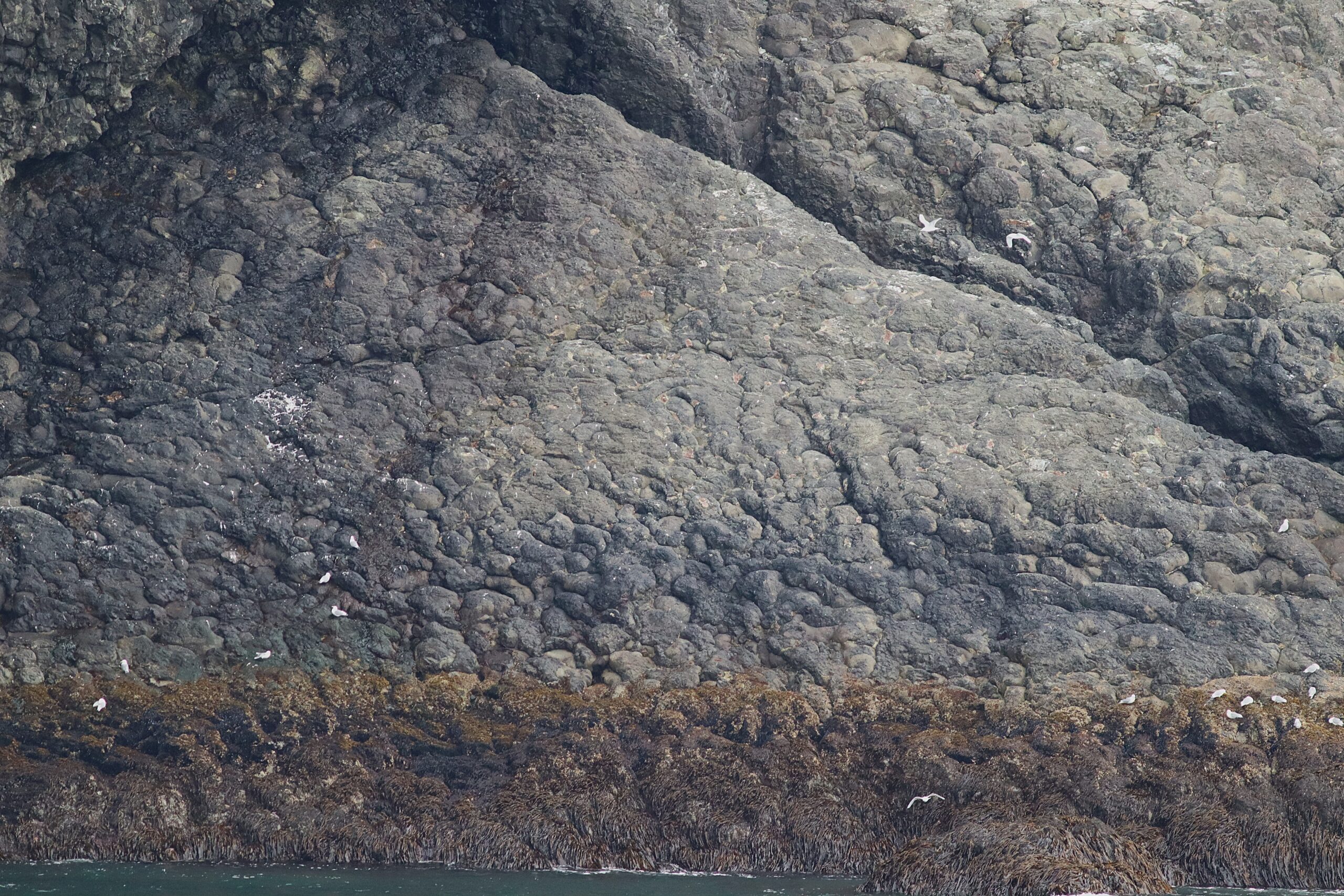
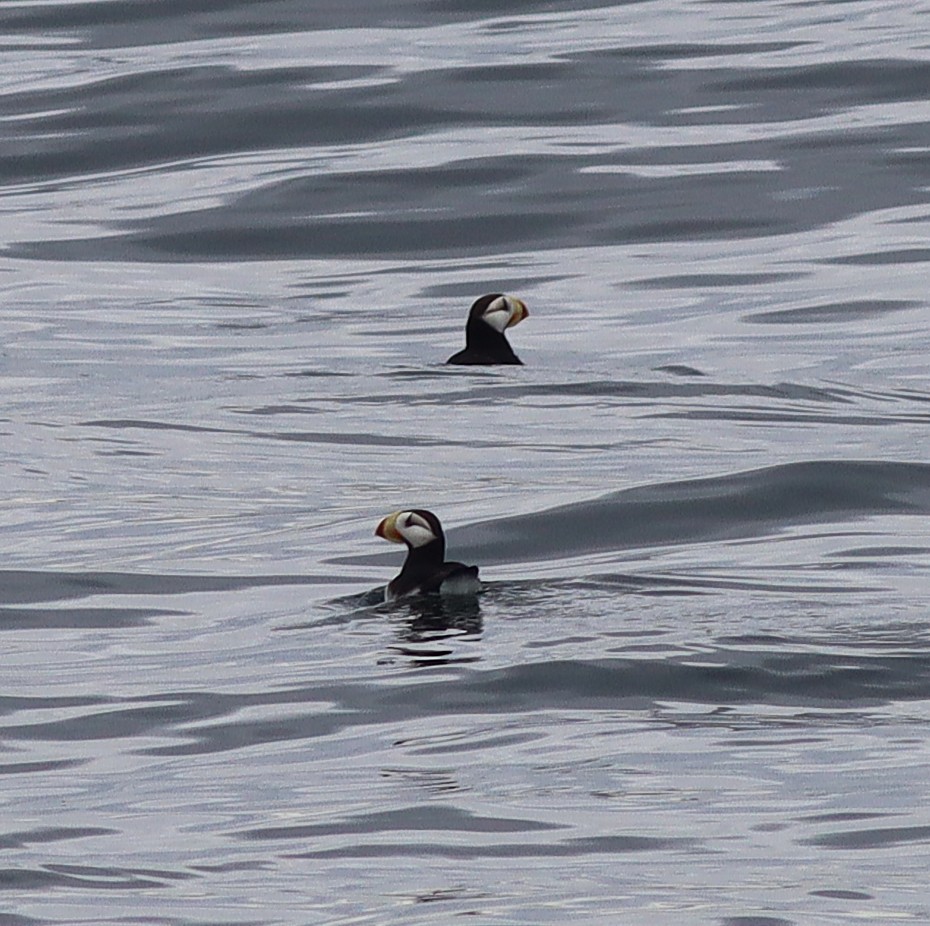
By late morning, the engines slowed and we approached the first of three rock outcrops for us to study with binoculars and from a safe distance. Collectively, we explored three rock exposures dotting the glaciated valley walls. Each outcrop of rock narrated a distinct part of the accretion of oceanic crust along the end of the North American plate at least 60 million years ago. With the mouth of Resurrection Bay and the southern tip of Fox Island at our stern, our forward view opened up to the Pacific Ocean. Dead ahead, the next shoreline was 1800 nautical miles away. Shift a few 10s of degrees south and the next stop would be Antarctica, some 8000nm in the distance. The horizon expanded. The sea state grew (along with the pitch and roll of the ship), and I enjoyed adding nearly a dozen bird species to my Life List.
Over the next several hours, many of us entered into a meclizine brain haze. The swell picked up quite a bit. Nothing for the seasoned crew, but certainly enough to make you think about mundane tasks like taking a shower. Or walking in a straight line. We met as a group in our lab to learn, just like students on future cruises will, and asked each other how we were doing. The seas were growing.
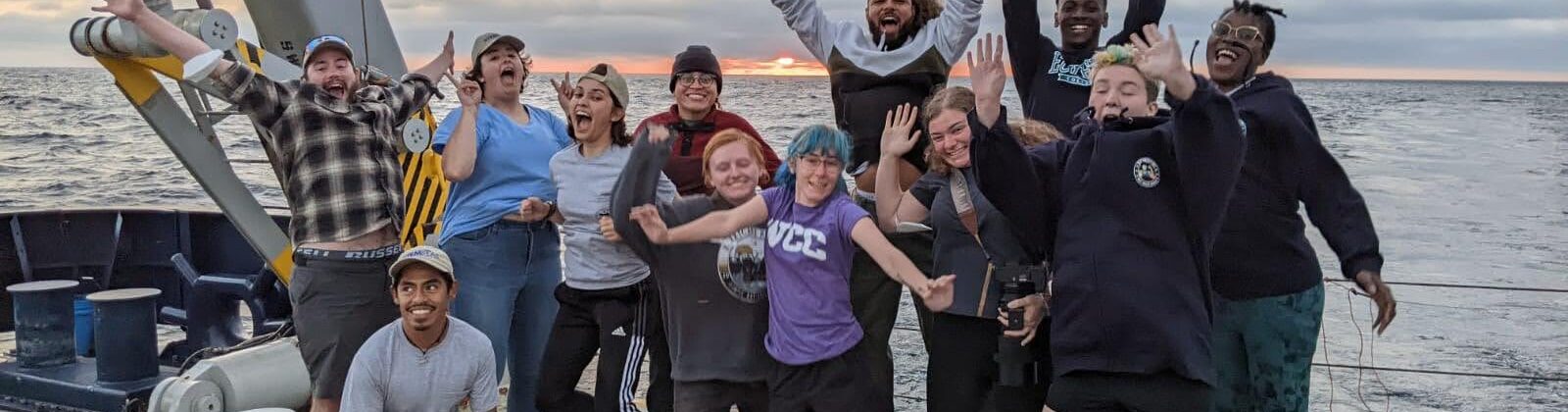
It is awesome to be here. On a world-class ship with equally notable crew. Among peers who are exceptionally grateful and excited for this experience and the opportunities to share with students. And to marvel first-hand at the open Pacific Ocean – one of Earth’s largest features that relatively few get to experience in this way. Thank you to everyone who makes STEMSEAS happen, including those at home and on land supporting us.