 by
by Imposter syndrome is strong with this one, it is. The feelings are a product of so much systemic bias you internalize during your life. I thought I had a handle on it waking up early and getting on the plane at O’Hare last week. After all, my work as a professor in Chicago has a way of making me feel confident.
Arriving in Anchorage, I got right to work with reading, observing, and collecting as a geologist. Traveling to Seward and getting on the R/V Sally Ride – my negative self-talk got stronger.
“Wow, now you’re in trouble.”
“You better be perfect, or else.”
“Don’t get motion sick or you’ll ruin everything.”
Of course, the cherry on top is my imposter syndrome, or that feeling that you just aren’t good enough.
Malcolm X College students – and all college students – does this sound like something you go through?
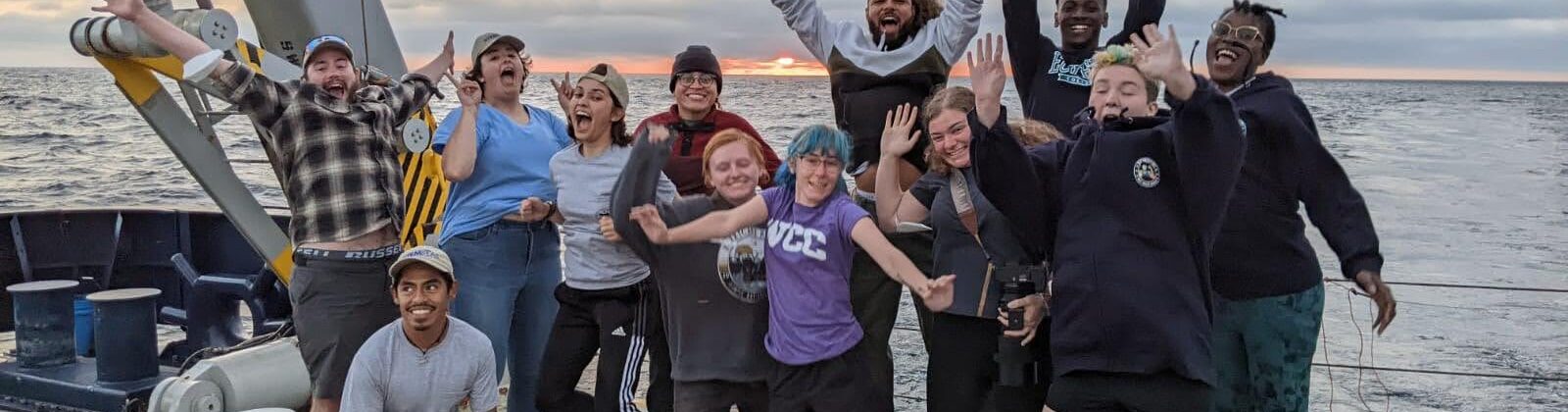
STEMSEAS does a great job of fostering inclusion and making science feel less daunting, allowing you to temporarily silence your inner critic. The sense of community is palpable. Involvement, not isolation, is a priority. Mistakes and screw-ups are embraced and eventually forgotten.
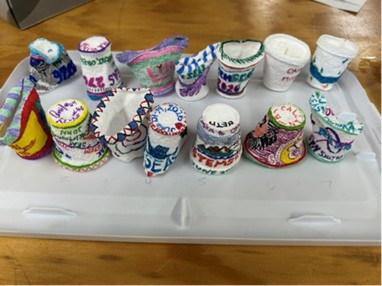
The last few days we’ve been adopting scientific projects that are doable based on the resources available on the ship. We’re finishing those up now. Tomorrow we present them in poster form. Lisa and I have been working on a mathematical method of determining hydrostatic pressure at a depth of 1500 meters below the ocean surface. Styrofoam cups were deformed by confining pressure when sent down with the ship’s CTD (conductivity, temperature, and depth) sampling rosette. They were decorated with Sharpie ink before being sent down. According to Lisa, “When pulled back up, they looked like perfect, tiny toy cups the size of a shot glass—with the drawings still perfectly intact!” We calculated that the styrofoam experienced an approximate 3x change in density, which we used to calculate the theoretical hydrostatic pressure at a depth of 1500 meters.
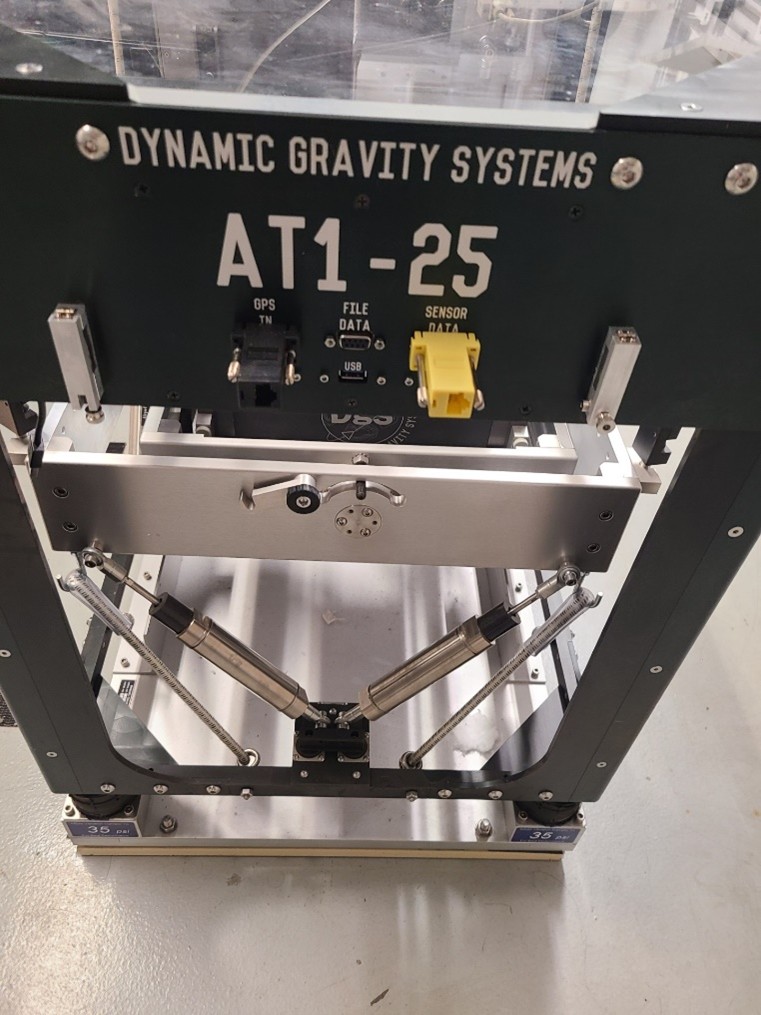
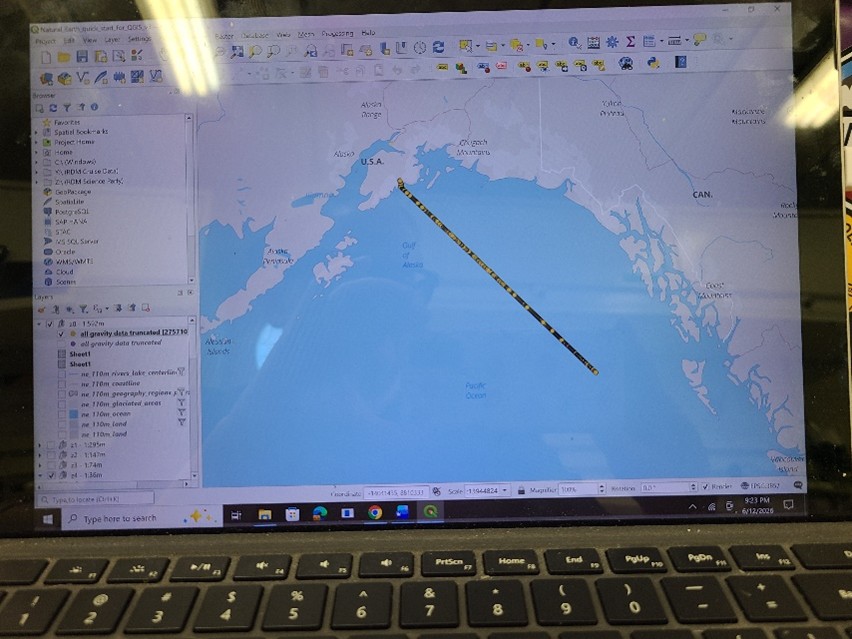
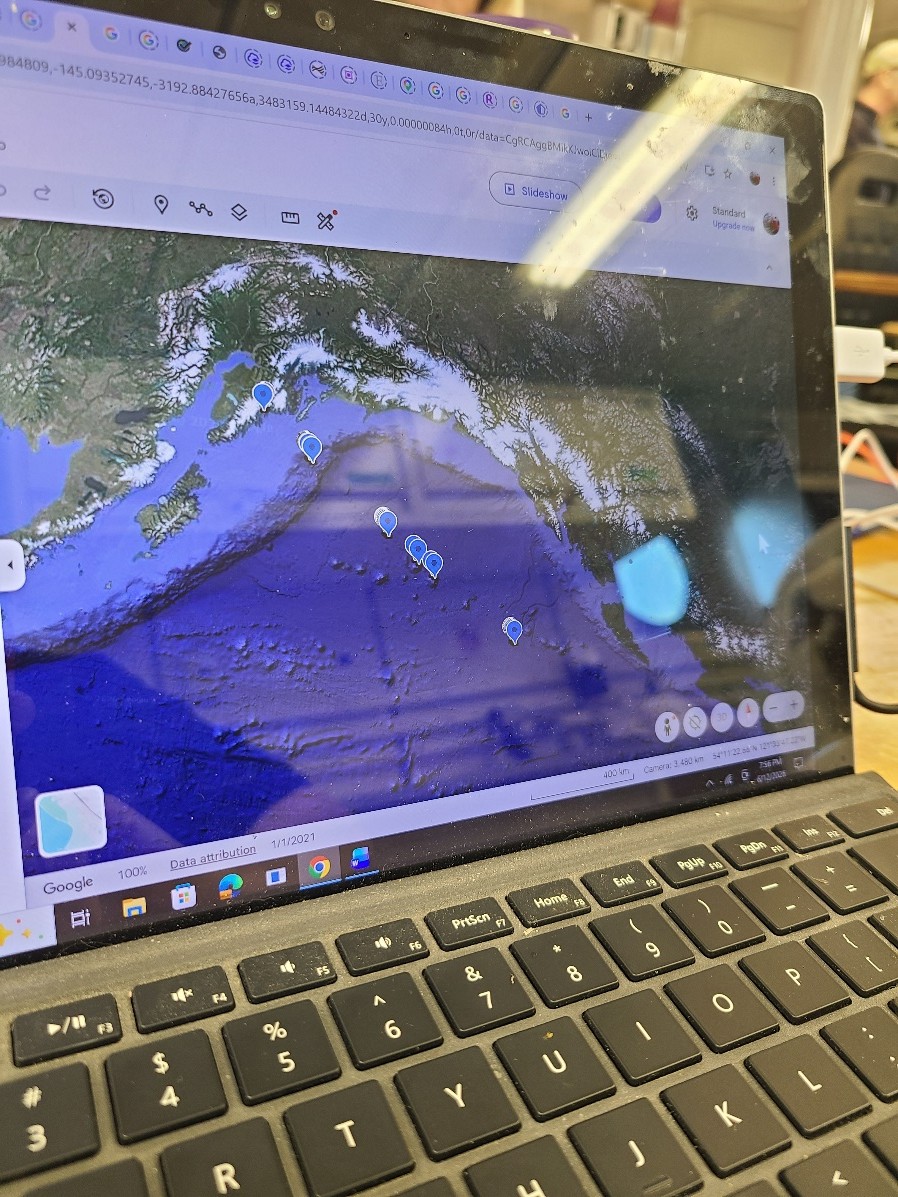
I love geophysics, and we have a great opportunity to collect geophysical data of the ocean crust using the R/V Sally Ride’s Dynamic Gravity Systems AT1-25 gravimeter. The device had to be turned off while the ship was in Canadian waters. (You can see in the QGIS map below the point at which we passed into Canada.) Unfortunately, the processing, visualizing, and interpreting of 275,000+ data points from Seward, Alaska to Newport, Oregon requires more time and resources than what the expedition has right now. It does make a nice project on geology, plate tectonics, statistics, and GIS technology if you’re so inclined on future expeditions. I’ll be working on the data.
Malcolm X students, and all community college students, you belong here. Reject your imposter syndrome.
You miss 100% of the shots you don’t take.
Refuse the status quo.
Consider applying for a STEMSEAS expedition.
If you have an interest in geology, chemistry, physics, biology, environmental science, or a plethora of other sciences, you are an ideal candidate. You don’t even have to be a science major; the program accepts all kinds of majors with non-science backgrounds. Wouldn’t it be amazing to have this on your resume for a future employer to see? If you’re interested in learning more, contact me.