 by
by By Mark Dragovich, Northwestern Michigan College
We woke up today 536 miles west of Los Angeles, surrounded by rough seas—10–12 feet high, with northwesterly winds at 22 knots. Last night was particularly turbulent, and the Science berthing took quite a beating. I feel for the students experiencing their first cruise, though this challenge offers an authentic glimpse into life at sea.
Despite the conditions, we dove into our experiments today. One of the highlights was designing Styrofoam cups to send to the ocean floor, testing how extreme pressure alters their structure. Everyone’s designs reflected their creative side, a reminder that science and art often intertwine.
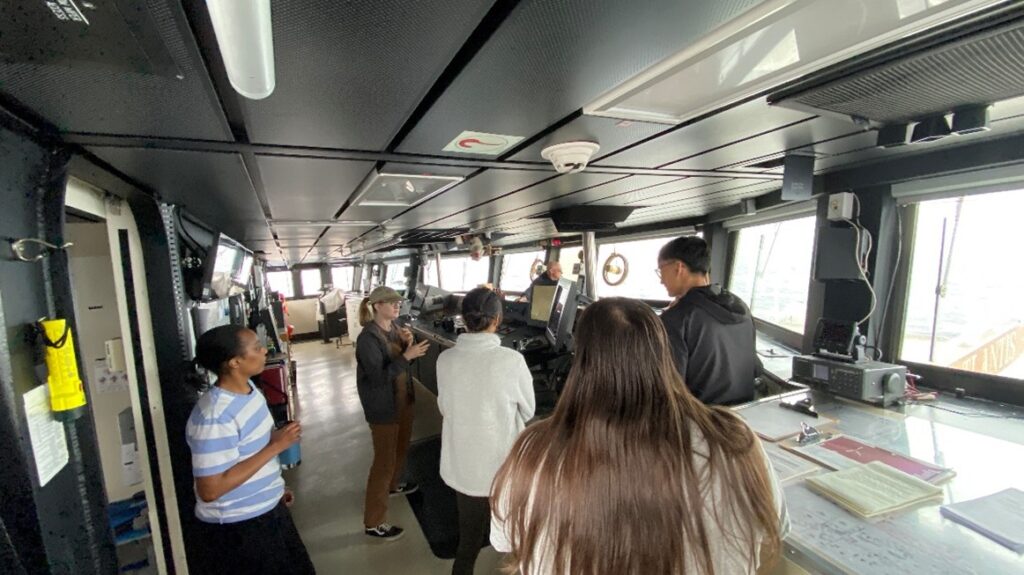
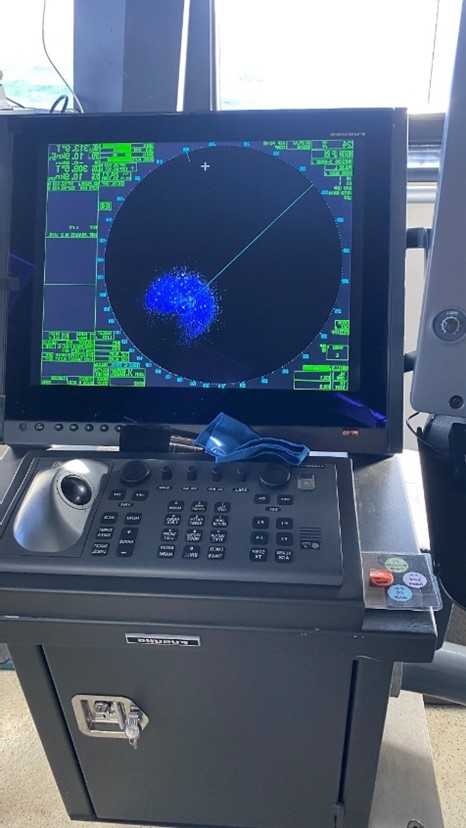
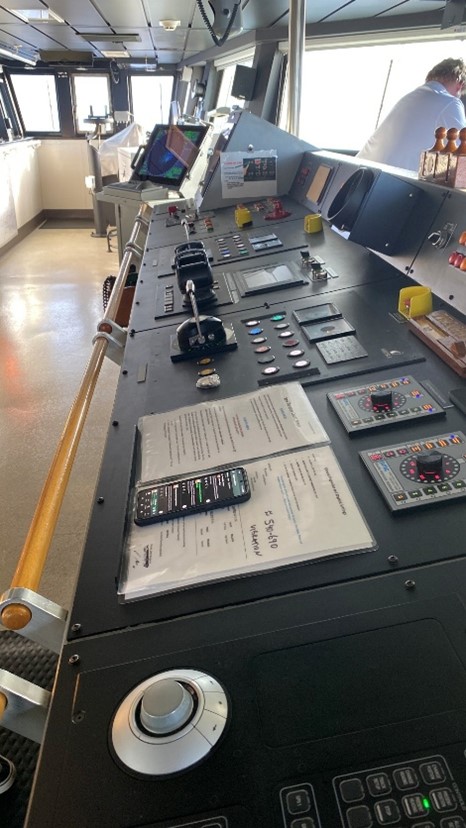
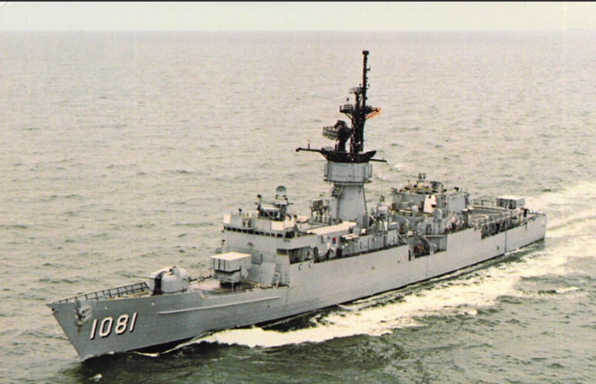
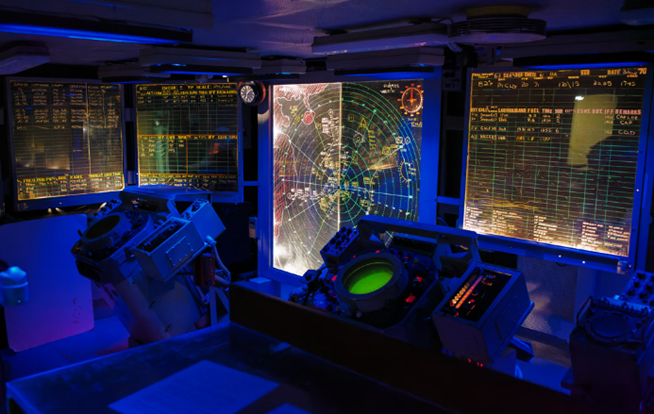
We also had the chance to tour the bridge alongside fellow NMC alum and Third Mate Brittni, who guided us through the ship’s navigational components. Abrian suggested we check out the onboard sextant—an unexpected throwback to my OSA school days in the ‘90s. Seeing the ship’s instrumentation reinforced just how far technology has come since my time as an OS. The modern bridge bears little resemblance to the USS Aylwin, where I served. Below are some photos of my ship and the combat information center, my workspace back in 1990.
The People Behind the Experience
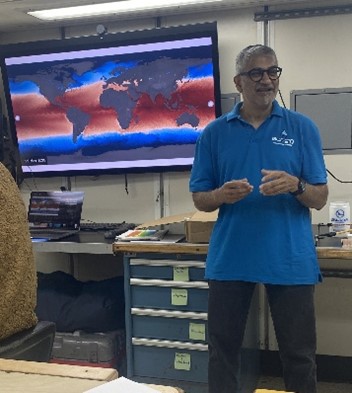
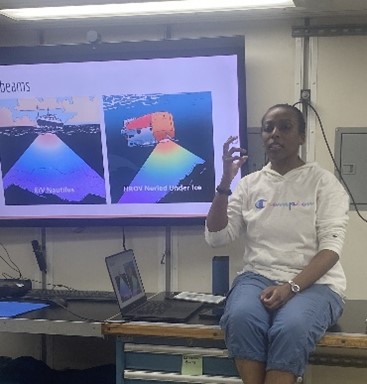
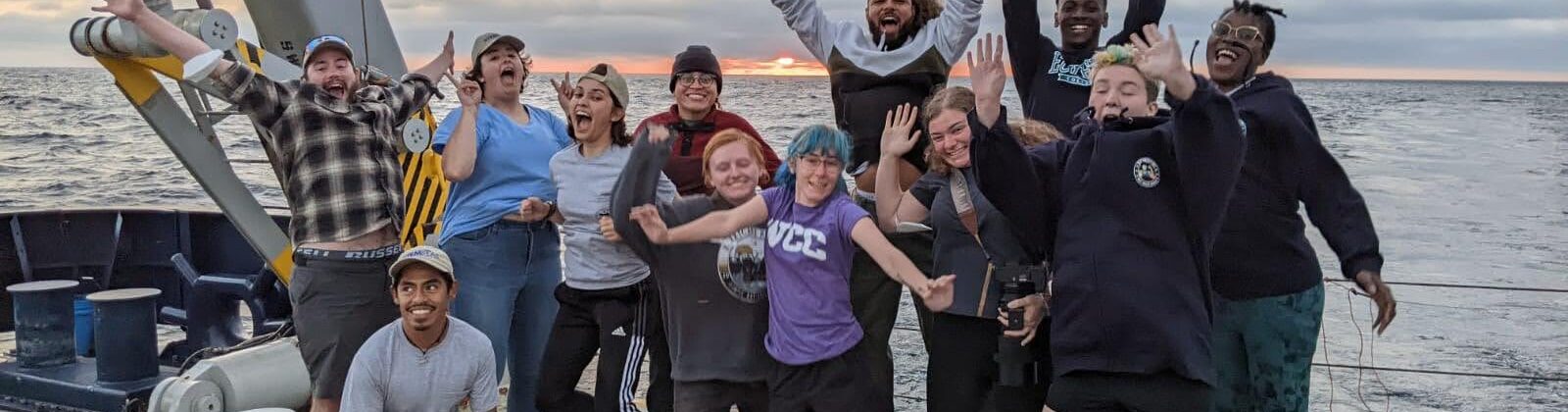
This journey has been nothing short of incredible. Our mentors—Ajit, Abrian, Sheldon, Tess, and Shannon—have made learning hands-on and immersive. Ajit, our lead scientist, has a gift for making oceanography accessible, weaving interdisciplinary connections that enrich our understanding. His team reflects diverse perspectives that round out the experience.
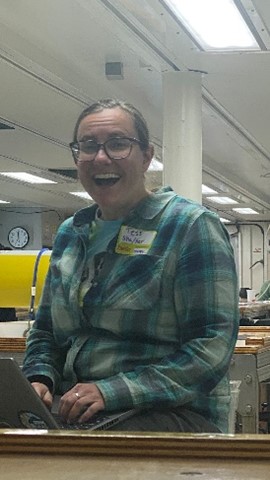
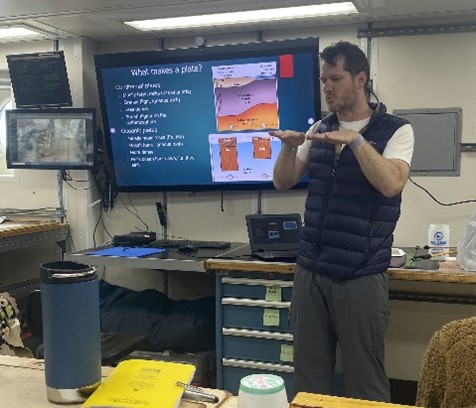
Abrian, an artist and cartographer, brings a unique visual dimension to science, merging imagery with passion and precision. Sheldon, with his geological expertise, translates complex concepts into digestible insights. Tess keeps our cohort engaged, her enthusiasm and energy lifting spirits throughout the day. One of our most effective icebreakers was a name game—pairing our names with action verbs—a surprisingly fun way to build connections.
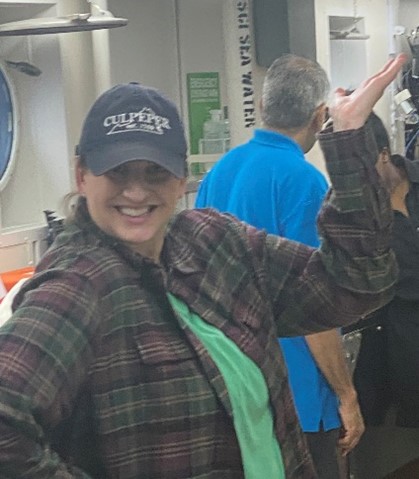
Shannon, representing BOEM, ties ocean science to policy and resource management. As a former Navy Honor Guard, we share common ground, adding another layer to our discussions.
Final Thoughts
In just a few days, I’ve been exposed to disciplines I never thought would interest me. Thanks to our mentors’ expertise and the reinforcement of hands-on learning, my curiosity for ocean sciences—art, marine technology, and beyond—has deepened. If you’re an undergraduate considering a career in ocean science, STEMSEAS is an invaluable opportunity. This program offers a firsthand look at the vast possibilities within water-related fields.
Mentors