 by
by 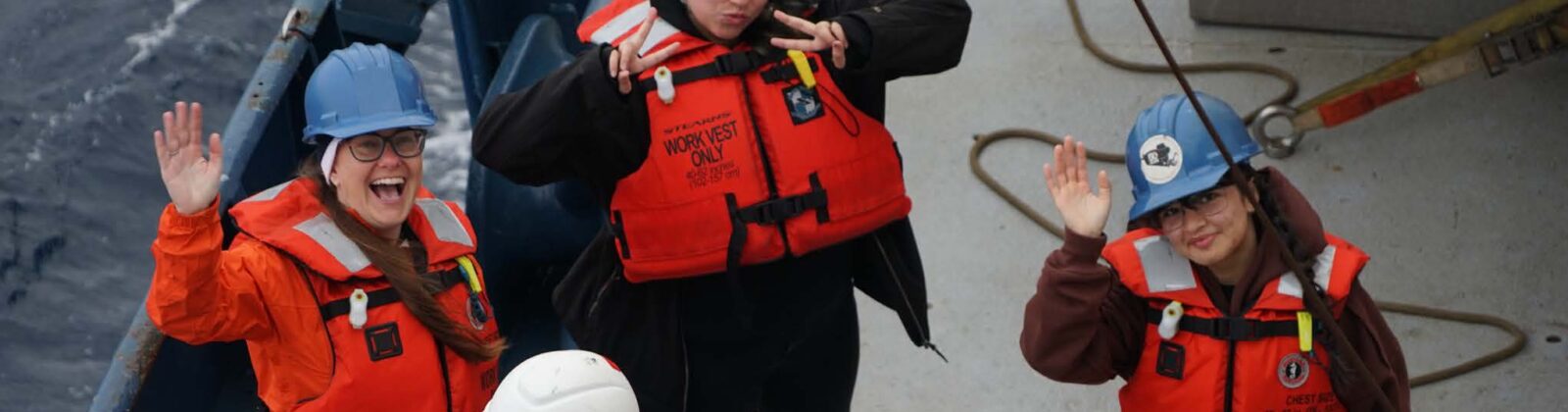
By Sarina Gautier, San Diego City College
June 6, 2025
My name is Sarina Gautier, a Film major attending San Diego City College. This expedition has been a tremendous experience these past few days aboard the R/V Atlantis. We are on day 6 of our journey and each day has been full of expansive learning, and hands-on marine science experience. I am a member of the June 2025 STEMSEAS crew, on an expedition to Dutch Harbor, Alaska from San Diego, California. This voyage is over 2,000 nautical miles in the Northern Pacific Ocean.
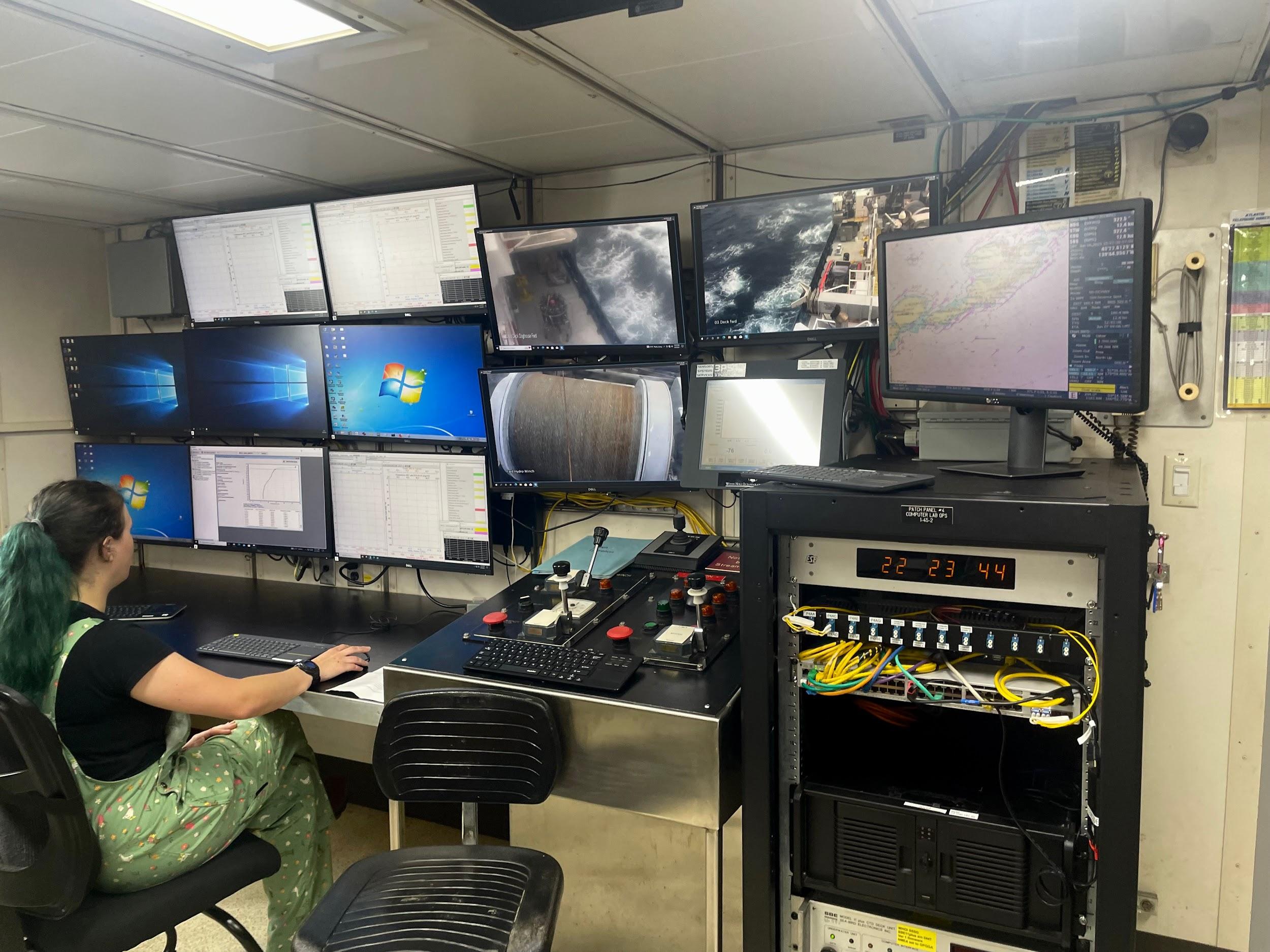
Today, we had several lectures and demonstrations scheduled, as we usually do throughout the week. Pictured above is an area we congregated to multiple times throughout the day, in the ship’s computer lab. This array of monitors is arranged to display ship data such as live feeds from the deck, ocean data below the surface, and information on the ship including our transit path. Below the displays are controls for the Winch which is a hydraulic machine onboard used to lift and deploy equipment into the water.
We also received a lecture from one of our mentors, Ajit Subramaniam, informing us about Satellite Oceanography. We learned about how we use satellite technology for navigation and to find data on our oceans. We can measure sea temperature and wave action on the surface to find topographical features down below on the seafloor.
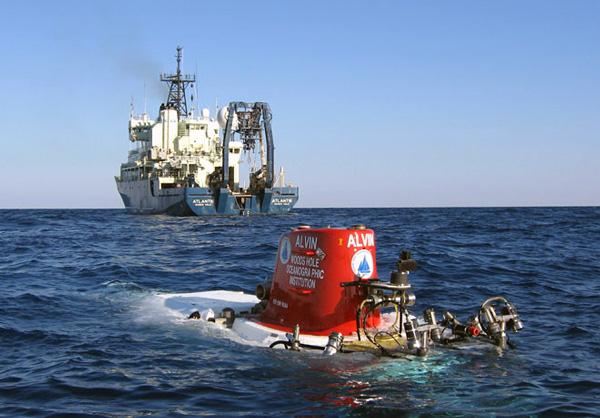
We then later explore these features with Remote Operated Vehicles (ROV), Autonomous Operated Vehicles (AOV), and Human Operated Vehicles (HOV). One of these vehicles known as Alvin can be seen above. HOVs communicate with research vessels such as the R/V Atlantis through radios and tethers, and data can be transmitted and relayed to scientists on shore via satellite.
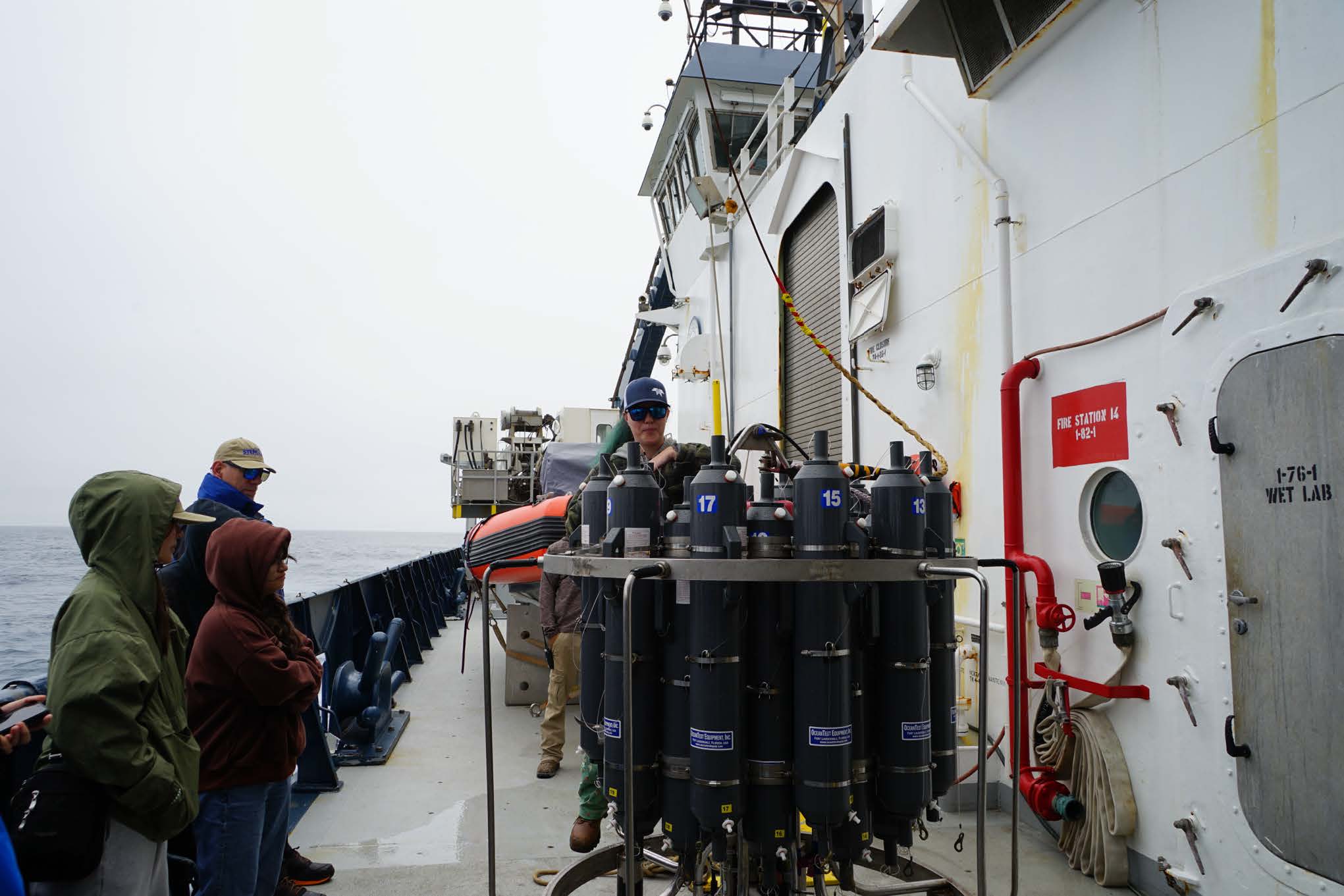
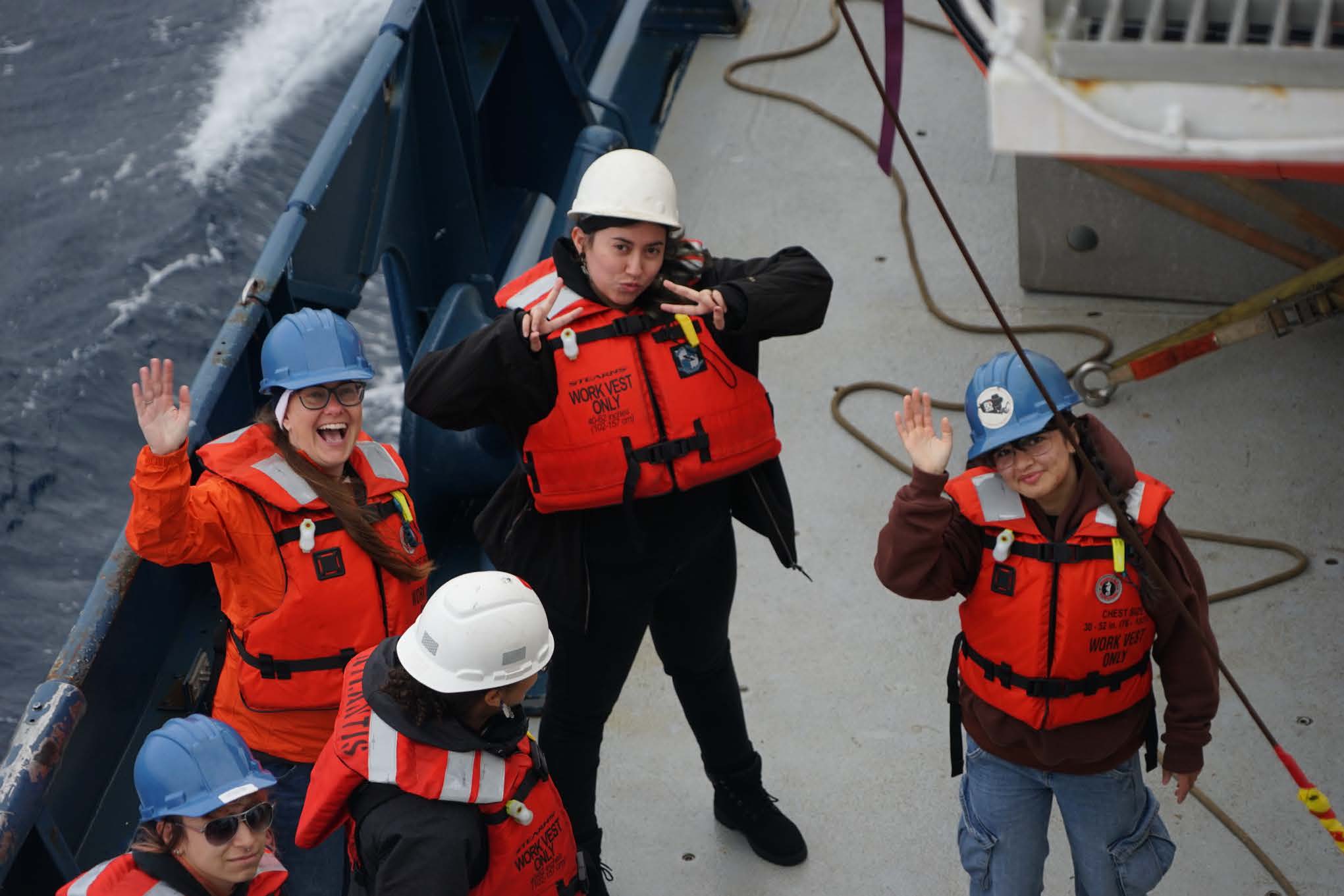
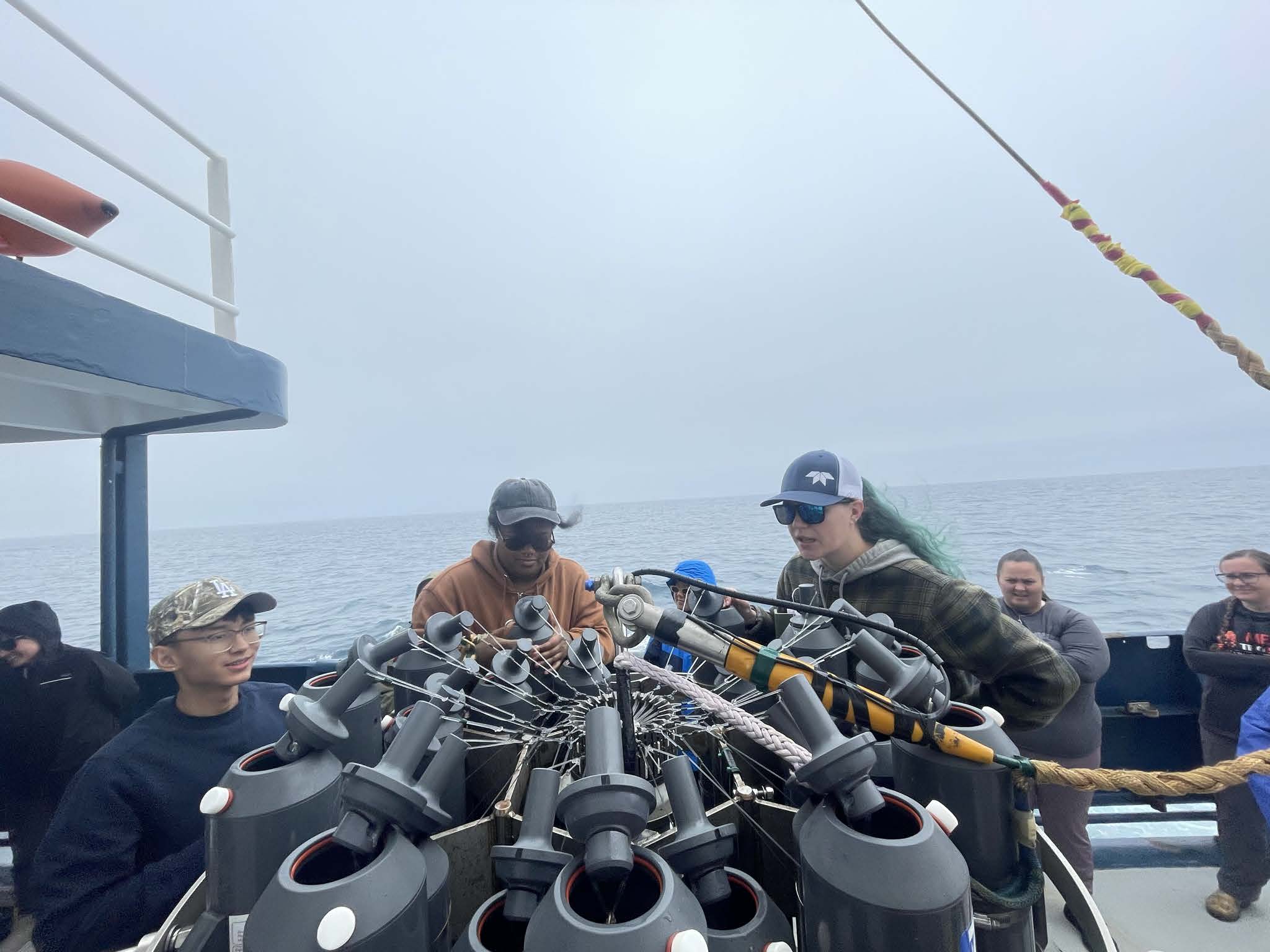
Later on at 1 pm one of the SSSGs (Shipboard Scientific Services Group) named Ana Elmendorf trained us on how to properly set up specialized water tanks used to measure certain water properties. These are called CTD tanks, named after what they measure which is conductivity, temperature, and depth. As seen in the photo below, our team goes through the process of opening and setting each tank for data retrieval purposes.
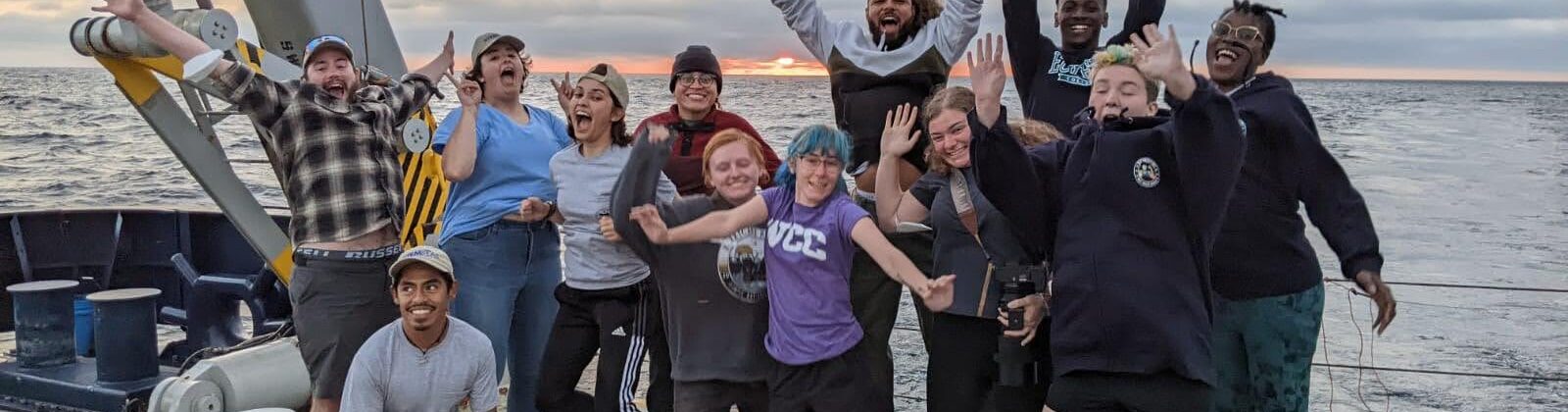
Today was a reasonably calm day out at sea, it was nice being able to stand without wobbling. It was also fun for all of us to find our sea legs and get used to life aboard a ship. The rough seas were challenging, yet also uplifting as they have brought us together in unity. It is reassuring to see everyone at the same time each day, having meetings that bring us together from various areas of the ship.
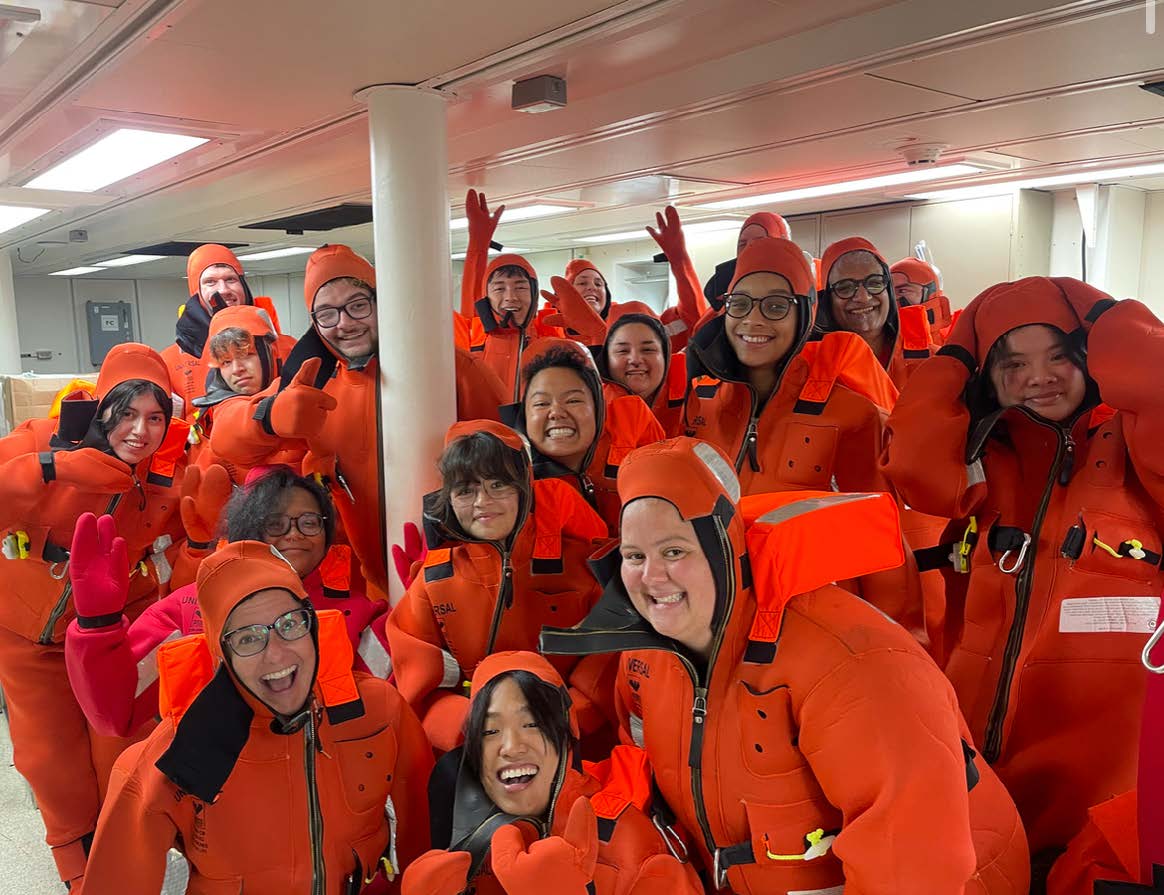
It has been an honor to work with some of the brightest minds I have ever come across. I have been working alongside my undergraduate peers with varying backgrounds in STEM, my mentors who have graduated in these fields who now pass on their knowledge, and the amazing crew on the ship composed of scientists, engineers, and staff.
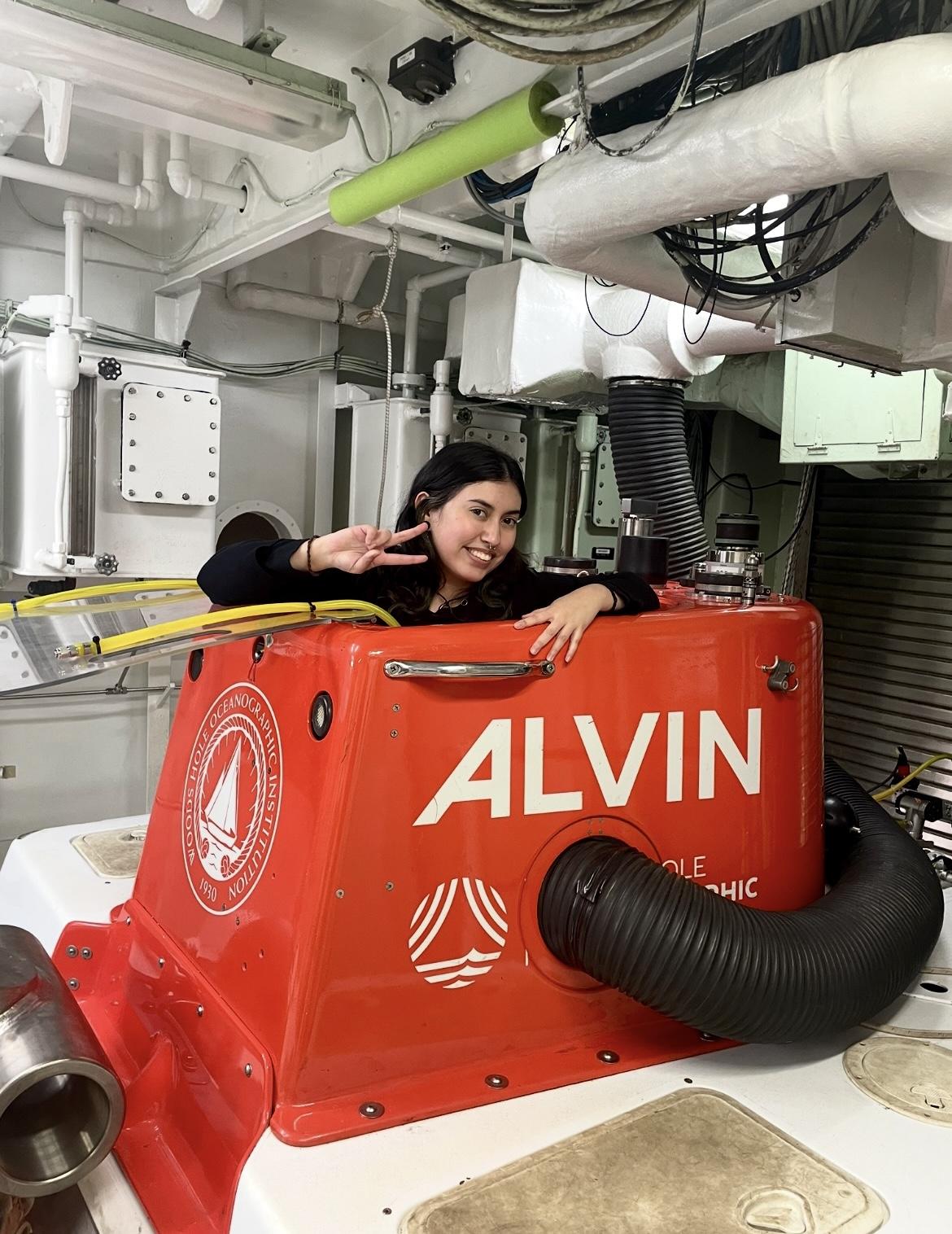
I have had the honor to be a part of several deployments of oceanic survey equipment like XBTs (Expendable Bathythermograph) and CTDs. One of my favorite moments was being able to go
into Alvin and see the instruments used within it firsthand. I am so glad to have met the Alvin team and the other skilled scientists and engineers on board. They have done a fantastic job at showing our STEMSEAS crew the intricacies behind their work here. This has truly been an eye-opening and elevating experience, surrounded by diverse areas of expertise. Thank you STEMSEAS!