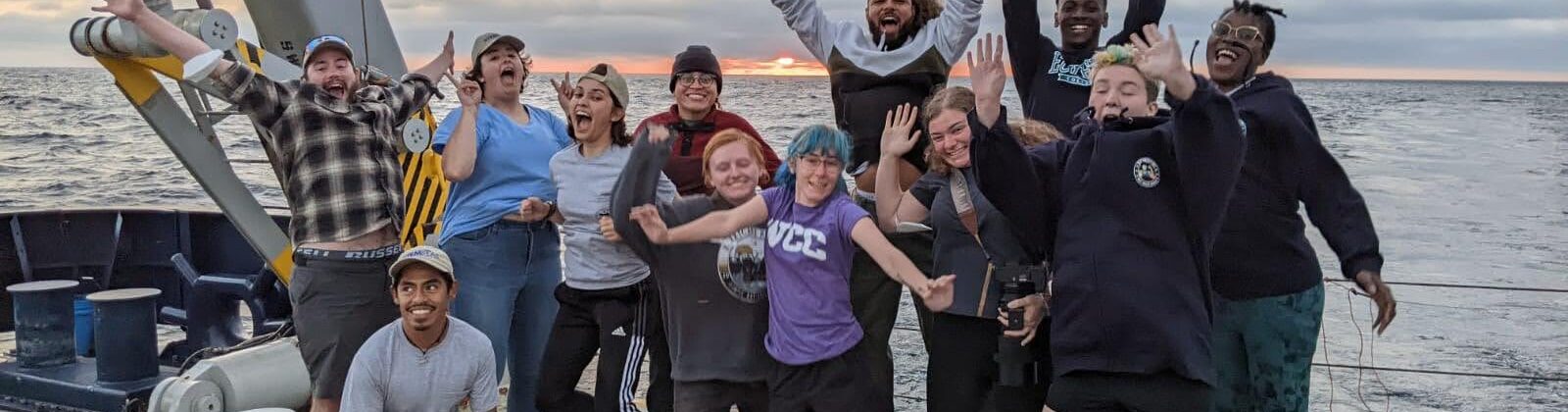
With generous funding from the Maxwell/Hanrahan Foundation, STEMSEAS has launched its new Chief Scientist Opportunities Program (ChOP). This program is designed to provide field-based training and mentorship for early career scientists to learn skills necessary for becoming chief scientists, while also leading opportunistic science on board STEMSEAS transits. We will be working closely with colleagues at UNOLS to tailor this program to the needs of our early career scientists and our sea-going community.
In addition, this funding will allow us to support a number of STEMSEAS undergraduates to assist the ChOP fellows with their data analysis in their labs following the expedition.
Our inaugural ChOP Fellows will sail on the September 2026 STEMSEAS transit, in partnership with Woods Hole Oceanographic Institute (R/V Atlantis) operator. Our July transit was cancelled due to a ship maintenence issue, so that opportunity will be rescheduled as soon as possible. Meet them below:
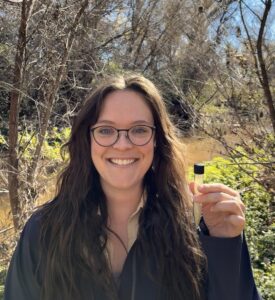
Dr. Emily Waggoner is an aquatic biogeochemist whose research combines microbial ecology, analytical chemistry, and molecular biology to understand how microbial communities regulate and respond to nutrient availability in aquatic systems. Her path into ocean science began as a teenager volunteering as a deckhand for a gray whale researcher before discovering marine biogeochemistry as an undergraduate researcher at the University of Southern California. In 2018, she joined the April STEMSEAS transit, where she met her future Ph.D. advisor, Solange Duhamel, and went on to train in the Duhamel Lab at both Lamont-Doherty Earth Observatory and the University of Arizona, earning her Ph.D. in Molecular and Cellular Biology in 2025. As a postdoctoral researcher at the University of Arizona, Emily now investigates the environmental fate of emerging contaminants in effluent-dominated freshwater systems. Returning to STEMSEAS eight years later as a co-chief scientist, she will lead shipboard incubations exploring how marine microbes use a range of organic phosphorus compounds. These experiments will provide preliminary data for postdoctoral fellowship proposals supporting the next stage of her career. Emily ultimately hopes to establish an interdisciplinary research lab to better understand and predict the future of aquatic ecosystems. Emily will be sailing in 2027.
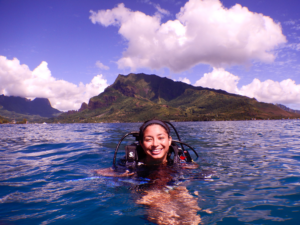
Dr. Blanca Alvarez is a marine biogeochemist from UCLA and lecturer at UC Berkeley. She received her BA in environmental science from Barnard College and her PhD in marine biogeochemistry from UCLA. Dr. Alvarez is interested in how stressors such as ocean warming, ocean acidification, and human activity will impact keystone reef species like corals, oysters, and coralline algae in the future. Blanca is an interdisciplinary scientist who uses many tools including environmental DNA and boron isotopes to examine how ecosystems will change. Blanca grew up on Catalina Island and spends every moment she can in the ocean or on a boat. She is a scientific diver and has logged 100+ dives on coral reef and kelp forest ecosystems. She will be sailing in 2027.
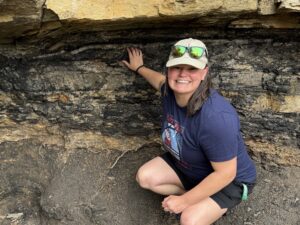
Dr. Theresa King is a postdoctoral fellow at the Colorado School of Mines where she works to understand oceanographic changes around Antarctica since the Last Glacial Maximum. Her research in paleoceanography (oceans of the past) seeks to answer questions of how and when oceanographic changes in the Southern Ocean influence the Antarctic Ice Sheet. This is important information to provide context for the changes we see today, and to better inform future climate predictions. For this work, we are unable to directly observe changes that happened thousands of years ago, so Theresa relies on marine archives that record ocean changes like deep-sea corals and sediment cores. She uses isotope geochemistry, sedimentology, and data cyberinfrastructure tools to investigate changes through time. Theresa has an interdisciplinary marine-science background with her BS from Coastal Carolina University, MS from Stony Brook University, and PhD from the University of South Florida. When she’s not working, Theresa can be found exploring Colorado hikes with her dog. Theresa will be sailing on the R/V Atlantis in September.
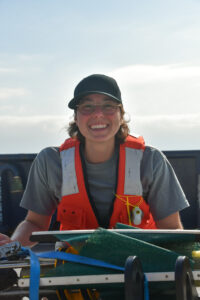
Dr. Agata Piffer Braga is a seagoing physical oceanographer working as a postdoctoral scholar at the Scripps Institution of Oceanography, University of California San Diego (UCSD). Her research centers on multi‑scale ocean fronts, with a particular focus on river‑plume fronts, the dynamic boundaries where fresh river water meets the ocean. These fronts are important for mixing of nutrients, pollutants, sediments, and other river‑borne constituents, shaping coastal and open ocean ecosystems and biogeochemical cycles. Because its processes span a wide range of spatial and temporal scales, she combines high‑resolution observations (satellites, AUVs, ship-based instrumentation, drones, surface drifters) with process‑based numerical modeling to capture the full spectrum of front dynamics. Agata completed her B.Sc. and M.Sc. at the Oceanographic Institute of the University of São Paulo, Brazil, and her Ph.D. in Computational Sciences & Engineering at University of Massachusetts Dartmouth. Agata will be sailing on the R/V Atlantis in September.